
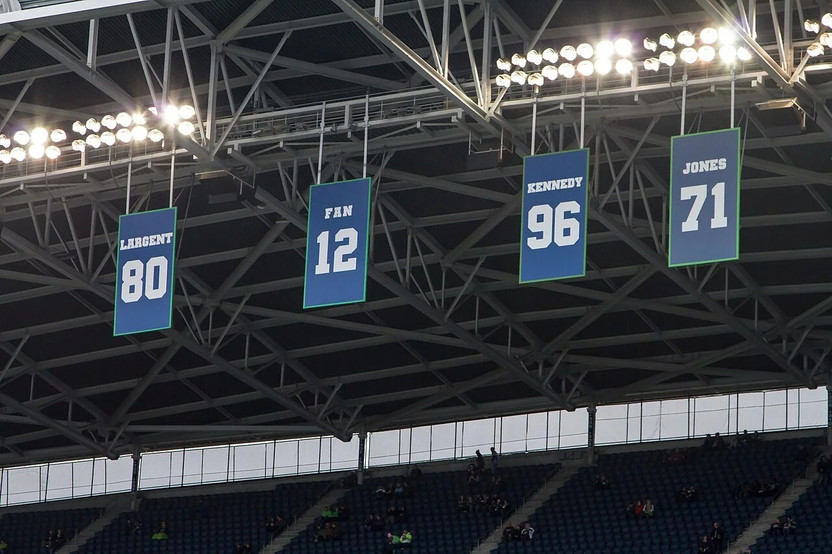
Best Seahawks Players Of All Time: Our Top 10
Posted by JerseyZenith on Oct 27th 2026
- Ten players, ranked by franchise-only performance across positions and eras.
- Performance cutoff: the completed 2025 season; no unfinished 2026 statistics or projected achievements.
- Canton and other honors reviewed separately through October 27, 2026.
- Jersey numbers identify documented use at this franchise; team years distinguish active and reserve status where relevant.
Seattle’s greatest careers were not all part of a championship roster. The order gives the early franchise and its outstanding individual defenders a fair comparison with the stars of the first Super Bowl-winning team.
Our top 10 at a glance: rank, position and franchise achievement
| Rank | Player | Position | Team years | Jersey number(s) | Franchise achievement |
|---|---|---|---|---|---|
| 1 | Steve Largent | WR | 1976–1989 | 80 | 819 catches, 13,089 yards and 100 receiving touchdowns |
| 2 | Walter Jones | OT | 1997–2009 | 71 | Nine Pro Bowls; four AP first-team All-Pro selections |
| 3 | Cortez Kennedy | DT | 1990–2000 | 96, 99 | 1992 AP Defensive Player of the Year |
| 4 | Russell Wilson | QB | 2012–2021 | 3 | Seattle quarterback for a Super Bowl win and another appearance |
| 5 | Bobby Wagner | LB | 2012–2021; 2023 | 54 | Six AP first-team All-Pro selections in his initial Seattle tenure |
| 6 | Kenny Easley | S | 1981–1987 | 45 | 1984 AP Defensive Player of the Year |
| 7 | Richard Sherman | CB | 2011–2017 | 25 | Three consecutive AP first-team All-Pro selections, 2012–2014 |
| 8 | Shaun Alexander | RB | 2000–2007 | 37 | 2005 AP MVP; 27 rushing touchdowns that season |
| 9 | Marshawn Lynch | RB | 2010–2015; 2019 postseason | 24 | Lead back on the Super Bowl XLVIII championship team |
| 10 | Earl Thomas | S | 2010–2018 | 29 | Three AP first-team All-Pro selections; Super Bowl XLVIII champion |
How we ranked these players
Our criteria compare peak within the same position and era, longevity in Seattle, individual achievement and postseason contribution. A tackle does not lose value because he lacks receiving statistics, and a safety does not automatically outrank an earlier defender because his team won more games. Legacy provides context for the final editorial choices.
The official 50-season celebration is a dated source for candidates and franchise history, rather than a numbered top ten copied here. The Seahawks added another championship in the completed 2025 season, but a team result does not automatically displace longer individual careers. Our evaluation stops after that season and makes no claim about unfinished 2026 performance. Canton status is checked separately through October 27, 2026. Wilson’s and Wagner’s work for other franchises is excluded, and no invented points or jersey-sales data decide the order.
The 10 greatest Seattle Seahawks players
1. Steve Largent
Largent starts the ranking because he supplied elite receiving value for almost the entire first generation of Seahawks football. All 819 catches, 13,089 yards and 100 receiving touchdowns came with Seattle. His achievements must be judged against the passing environment of the 1970s and 1980s, rather than modern volume alone. Jones offers an equally compelling case at a less visible position, but Largent’s sustained production and role in establishing the franchise earn a narrow editorial edge. Seattle’s later championships are not required to make that early career great.
2. Walter Jones
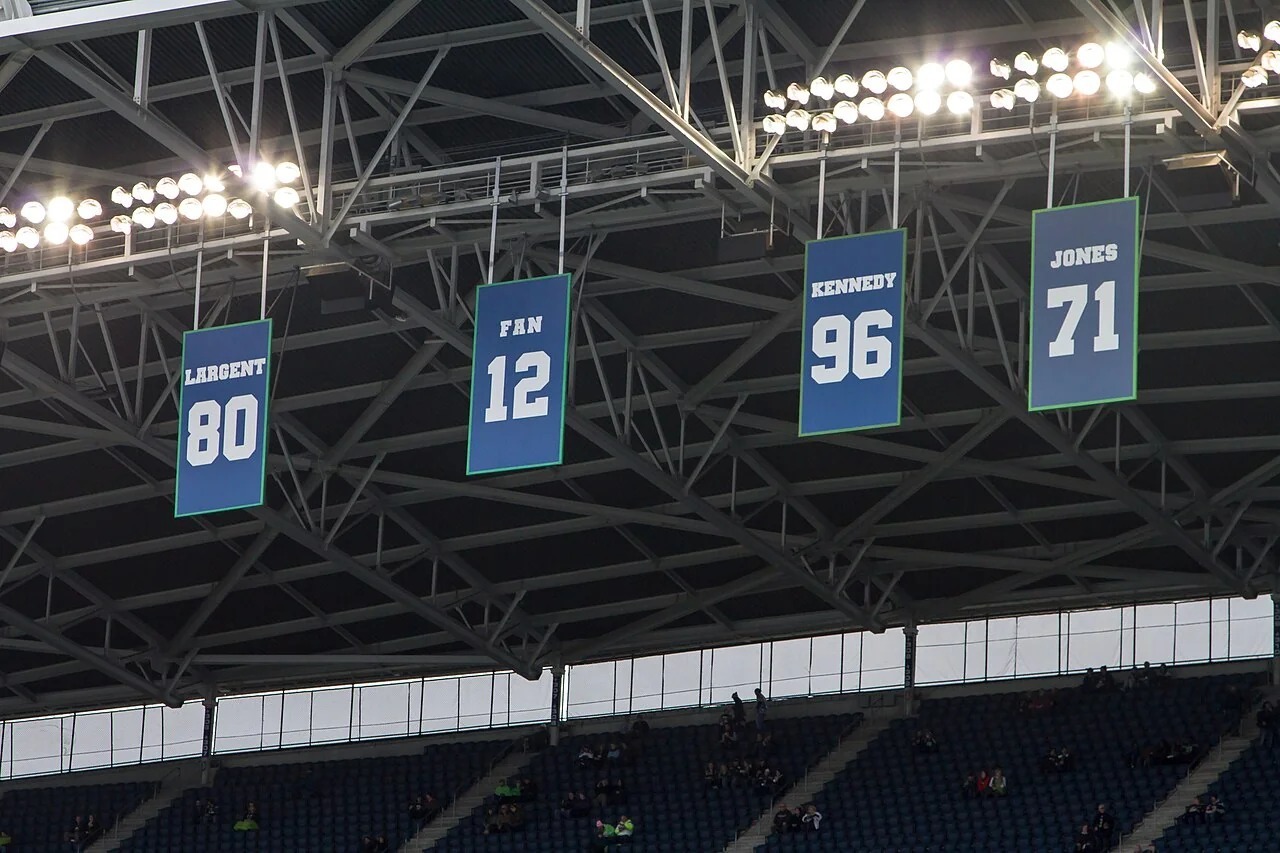
Jones is second because thirteen Seattle seasons of tackle play included an exceptional sustained peak. Nine Pro Bowls and four AP first-team All-Pro selections provide contemporary evidence for the reputation. Protecting the passing game and moving defenders in the running game created value without a running back’s box-score visibility. His role on the team that reached Super Bowl XL also matters. We place him just behind Largent because of the latter’s longer uninterrupted statistical footprint, while recognizing that readers who prioritize position-level dominance can reasonably put Jones first.
3. Cortez Kennedy
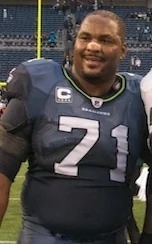
Kennedy’s 1992 AP Defensive Player of the Year award is especially instructive because Seattle’s team record did not reflect his level of play. It demonstrates why franchise greatness cannot require a championship or even a winning season. Over eleven Seahawks seasons he created interior disruption that changed protection decisions and gave teammates opportunities. We place him third because that extraordinary peak sits alongside substantial longevity. Jones and Largent offer longer elite service; Kennedy’s case remains stronger than a list based only on playoff success would ever suggest.
4. Russell Wilson
Wilson’s ten Seattle seasons combine sustained quarterback production with the franchise’s first Super Bowl championship and a second appearance the following year. His ability to extend plays supplied a distinctive offensive advantage, although the defense and running game share the championship credit. We count only Seattle work and exclude all later clubs. He sits fourth because his offensive importance and longevity outweigh the shorter careers below, while the three above reached especially commanding position-level peaks. This is a franchise comparison, not a forecast about how his full career will eventually be judged.
5. Bobby Wagner
Wagner ranks fifth because the sustained excellence at linebacker extends well beyond association with the Legion of Boom. Six AP first-team All-Pro selections during his initial Seattle tenure provide a strong measure of how contemporaries viewed his performance. His return for the 2023 season adds Seattle service without importing achievements from other teams. He narrowly trails Wilson because we value the quarterback’s longer continuous offensive responsibility and two Super Bowl runs. A ranking that weights defensive consistency more heavily could move Wagner above him without changing any underlying facts.
6. Kenny Easley
Easley brings one of the strongest short-peak arguments in Seahawks history. The 1984 AP Defensive Player of the Year award captures a safety capable of changing both coverage and run support, while his broader Seattle work established a demanding standard for the position. His seven-season career limits the accumulated value compared with Wagner and the players above. We still place him sixth because peak matters, particularly when medical circumstances shorten a career. His ranking comes from what he accomplished in Seattle, without assuming additional seasons that never happened.
7. Richard Sherman
Sherman’s Seattle peak combined coverage production with the ability to reshape where opponents wanted to throw. Three straight AP first-team All-Pro selections from 2012 through 2014 place that assessment on more than the reputation of a famous secondary. He also played a major role in the Super Bowl XLVIII defense. We give Easley a narrow edge for the individual defensive peak, while Sherman’s championship contribution keeps the comparison close. His later San Francisco career is excluded, so this placement rests entirely on seven Seattle seasons.
8. Shaun Alexander
Alexander’s 2005 AP MVP season supplies the offensive peak that secures his place. His 27 rushing touchdowns that year helped drive Seattle to its first Super Bowl appearance. The offensive line deserves shared credit, but that does not erase his finishing ability and broader production over eight Seahawks seasons. He ranks behind Sherman because we value the cornerback’s sustained elite standing slightly more than a concentrated running-back peak. Alexander stays ahead of Lynch here through the MVP-level ceiling and longer Seattle service, a weighting that readers can reasonably challenge.
9. Marshawn Lynch
Lynch’s value was more than the symbolism of one famous playoff run. His physical style helped give the championship offense a stable identity and allowed Seattle to pair explosive passing with a demanding ground game. We count his original Seahawks tenure and the brief return for the 2019 postseason, rather than the whole NFL career. Alexander wins the adjacent comparison on league-wide peak and longer Seattle service. Lynch answers with championship contribution and repeated playoff impact, leaving him securely in this editorial top ten even without treating every team win as an individual accomplishment.
10. Earl Thomas
Thomas rounds out the list because his range at safety was central to how Seattle’s defense could deploy the rest of its secondary. Three AP first-team All-Pro selections support the peak, and nine Seahawks seasons provide a substantial body of work. The championship contribution matters alongside, rather than instead of, those individual credentials. We put him just behind Lynch because of the running back’s repeated role in defining the postseason offense. His case against Sherman or Easley illustrates how close comparisons become when several elite defenders shared responsibilities in very different eras.
Best Seahawks defensive players of all time
Among the best Seahawks defensive players of all time, Kennedy is our highest choice, followed here by Wagner, Easley and Sherman. Their responsibilities differ: interior disruption, linebacker range, safety versatility and outside coverage. Thomas also earns a top-ten place. These are comparisons within the same franchise list, rather than a second ranking that would require another URL or a different set of criteria.
Wear their legacy
Largent’s early-franchise era and the first championship secondary create different visual reference points. The Seahawks throwback collection is a useful starting place for an older look, while the legends collection provides a broader historical route. The ranking does not promise that every listed name has a matching product.
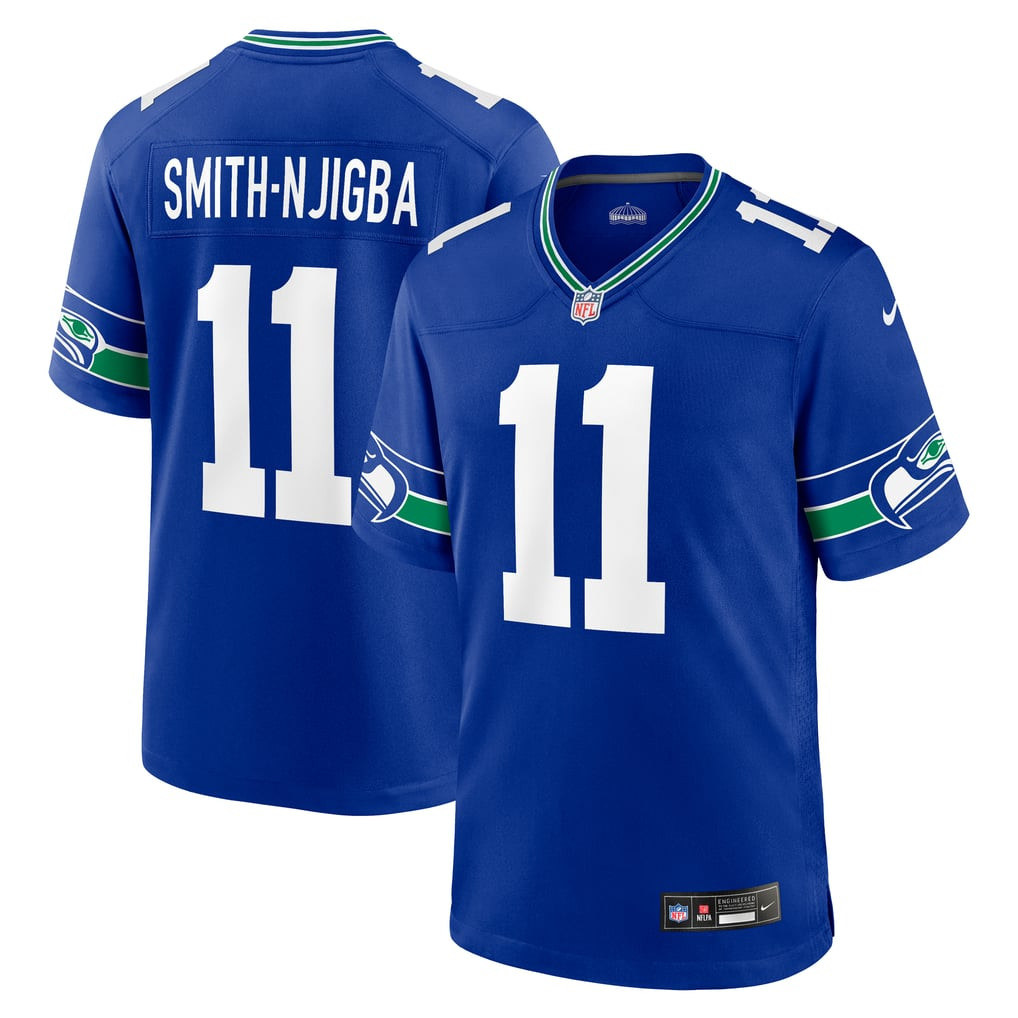
For current Nike offerings, check the actual edition and player number instead of assuming a modern cut reproduces a past game jersey. Kennedy’s number history illustrates why the year matters. Use the Seahawks number guide for number policy and the Hall of Famers guide for induction status and brief Seattle ties.
Frequently asked questions
Why put Steve Largent ahead of Walter Jones?
Largent receives a narrow edge for fourteen seasons of elite franchise receiving production in an older passing environment. Jones has a strong alternative case through sustained tackle dominance; the adjacent order is an editorial judgment.
Does every great Seahawk need a Super Bowl ring?
No. Kennedy’s 1992 defensive award and the early careers of Largent and Easley deserve recognition independently of team championships. We assess individual performance against the player’s own era.
How does Bobby Wagner’s return count?
The 2023 Seattle season belongs in his franchise tenure, while achievements for other teams do not. The table separates the two Seattle playing spells instead of presenting one continuous run.
Is this a Hall of Fame list?
No. This top ten compares playing value through 2025. Canton membership and Ring of Honor recognition have separate rules, dates and purposes, covered in the linked membership guide.
Sources
- Seahawks official 50-season history, dated context
- Canton profile: Steve Largent
- Canton profile: Walter Jones
- Canton profile: Cortez Kennedy
- Canton profile: Kenny Easley
- Official 2025 Seattle Seahawks media guide: franchise careers, numbers and records
- Bobby Wagner’s six Seattle first-team AP All-Pro selections
Sources checked October 27, 2026. Performance comparisons stop at the completed 2025 season; Canton membership reflects completed induction classes through 2026.