
Cardinals Super Bowl Wins: Arizona's XLIII History
Posted by JerseyZenith on Oct 27th 2026
- Super Bowl record: 0–1 through LX.
- Only appearance: XLIII after the 2008 season, played February 1, 2009.
- Arizona wore red jerseys; Pittsburgh won 27–23.
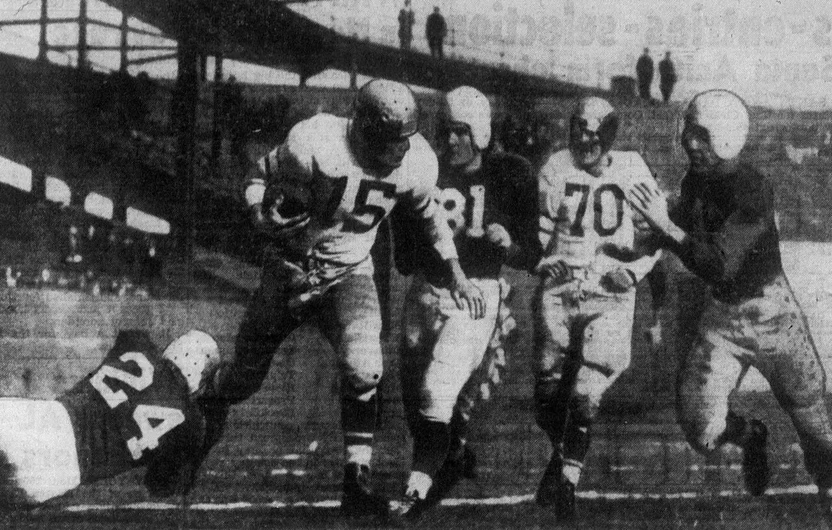
- Chicago's 1925 and 1947 NFL titles predate the Super Bowl.
Arizona Cardinals Super Bowl wins are often confused with the franchise's much older championship history or the memory of Larry Fitzgerald taking a late lead in XLIII. The Cardinals reached the final once and came close, but Pittsburgh won. To follow the story accurately, keep the Chicago league titles, the Arizona conference title and the Super Bowl result in separate columns.
Arizona Cardinals Super Bowl record at a glance
| Super Bowl | Season / game date | Opponent | Score (team first) | Jersey color / style | Game MVP |
|---|---|---|---|---|---|
| Super Bowl XLIII | 2008 / Feb. 1, 2009 | Pittsburgh Steelers | L 23–27 | Red; home-style | Santonio Holmes, Steelers |
The season is the football season being completed; the game takes place in the next calendar year. Home-style and away-style describe the jersey, not the Super Bowl venue. The MVP column records the game award, including opponents.
Chicago NFL titles belong to the earlier franchise history
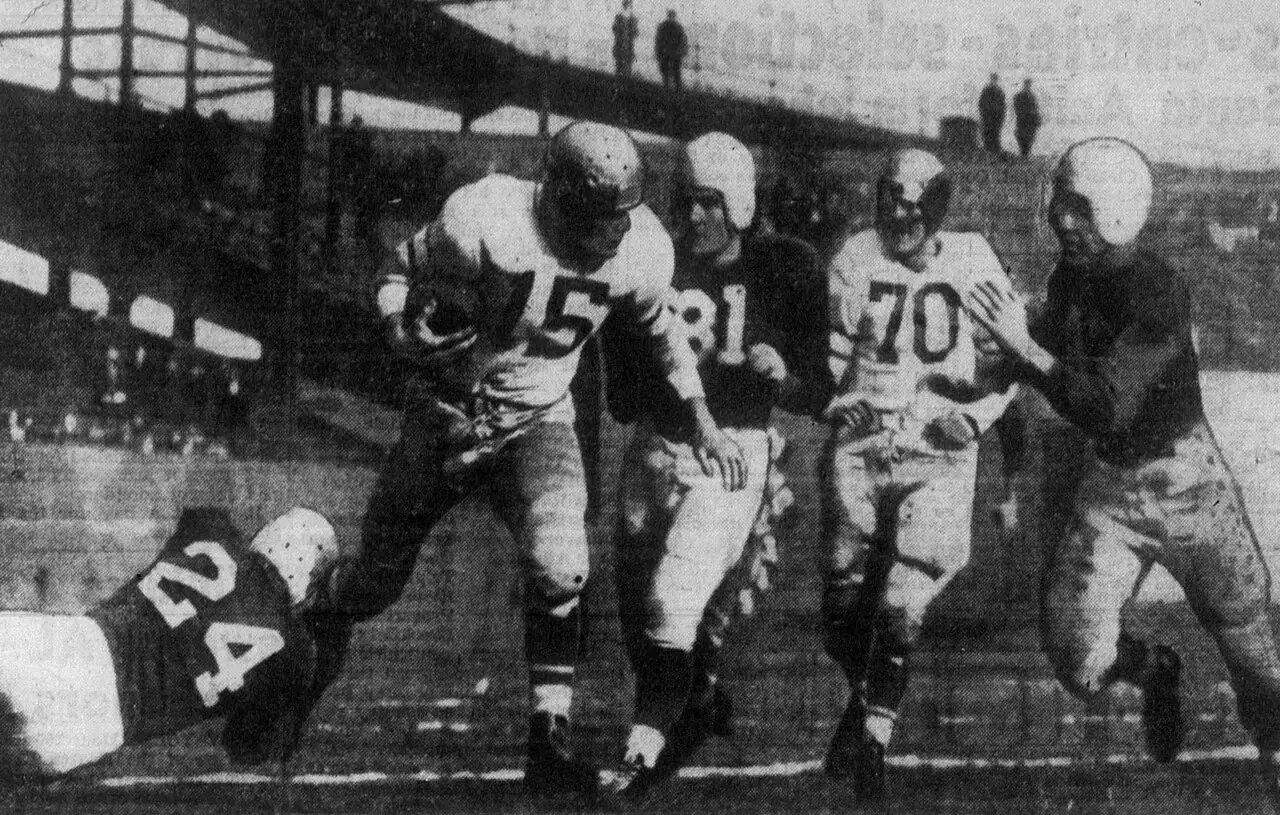
The Cardinals' history did not begin with their move to Arizona. The Pro Football Hall of Fame lists NFL championships in 1925 and 1947, both from the Chicago period. Those titles came before the first Super Bowl. They are part of the franchise's league record, but neither is a Super Bowl victory. The 1947 championship photograph illustrates that earlier competition rather than an Arizona Super Bowl.
City names help prevent another mix-up. Chicago, St. Louis and Arizona identify different chapters of the football franchise. A search that says only 'St. Louis Cardinals' can also lead to baseball material, which does not belong in this NFL record. For this guide, Cardinals means the football team, and the table counts only its Super Bowl appearances. The older league titles remain significant under their proper names.

The 2008 season became Arizona's XLIII appearance
Arizona reached its first Super Bowl after winning the NFC for the 2008 season. Kurt Warner was the quarterback, Larry Fitzgerald a central receiving threat and Ken Whisenhunt the head coach. The final was played in Tampa on February 1, 2009. Calling it the 2008 team's appearance and dating the game to 2009 describes one run, not two separate championship seasons.
That distinction is useful when a fan remembers Warner and Fitzgerald but asks what year the Cardinals won the Super Bowl. Arizona did not win it. The team won its conference, advanced to XLIII and lost to Pittsburgh. A conference championship can anchor an era tribute without changing the final result. Keep the Roman numeral and the actual opponent with the season when labeling a photograph, jersey display or gift.
How close were the Cardinals to winning XLIII?
Fitzgerald's late 64-yard touchdown reception helped put Arizona ahead 23–20. Pittsburgh answered with a touchdown pass from Ben Roethlisberger to Santonio Holmes, and the Steelers won 27–23. Holmes was named the game MVP. The Cardinals' official recap captures both the late lead and the final reversal, so there is no need to invent a victory to explain why the game remains memorable.
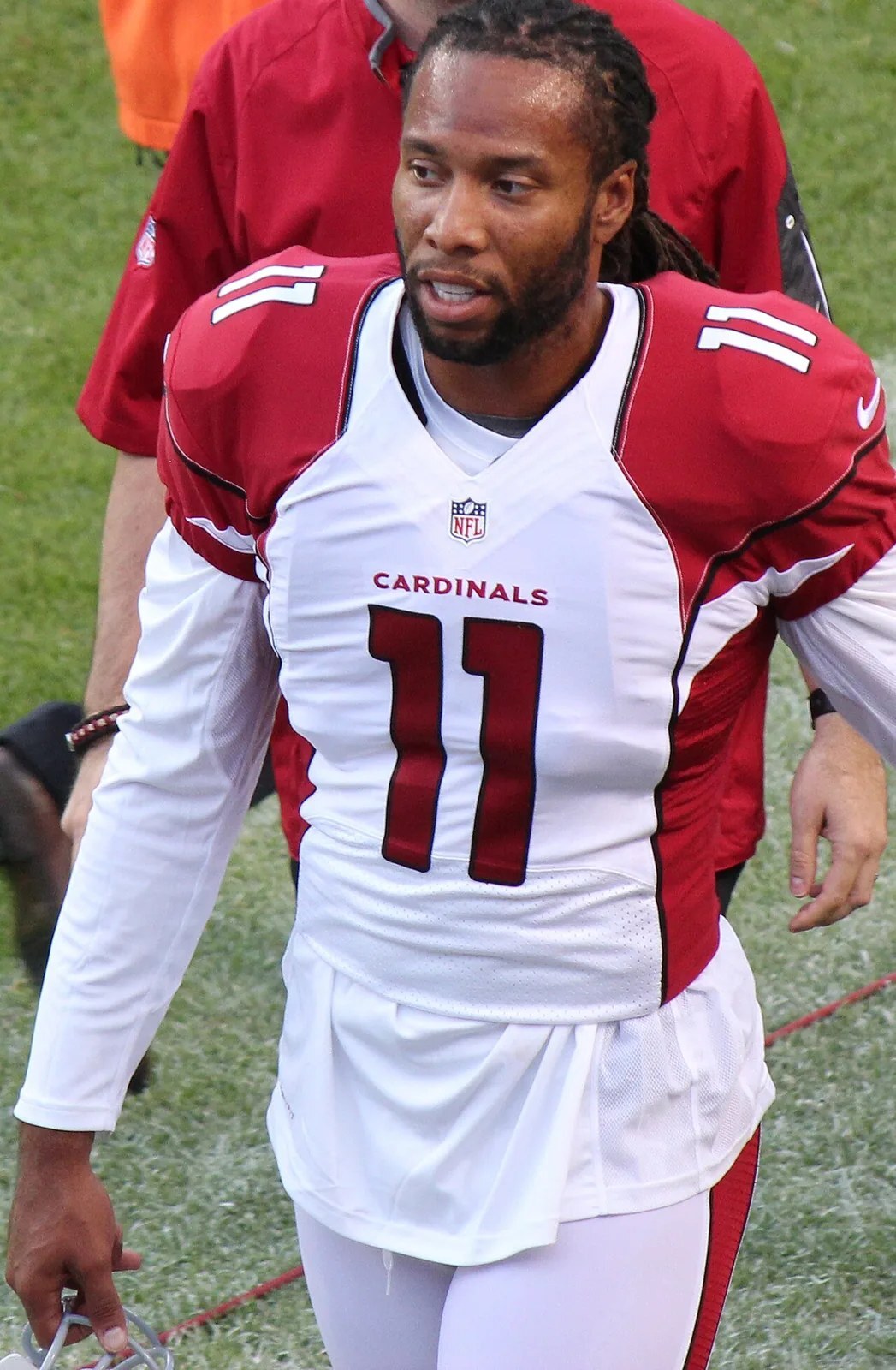
A photograph of Fitzgerald in a white-and-red uniform from 2015 shows the player in a later season, not his XLIII touchdown. It helps compare an era of Cardinals design while preserving the date. The famous receiver's individual impact, Arizona's NFC championship and Pittsburgh's Super Bowl victory are different facts. Keeping them separate gives fans a more accurate account than a generic reference to a championship team.

What Arizona wore in the Super Bowl
The Cardinals wore red jerseys and white pants in XLIII, while Pittsburgh wore white jerseys. Red is therefore the relevant Arizona jersey color for a game-inspired reference. Home-style red does not mean the game was played in Arizona: the Super Bowl venue was Tampa. The table records the actual shirt color rather than asking a reader to infer it from a home or away designation.
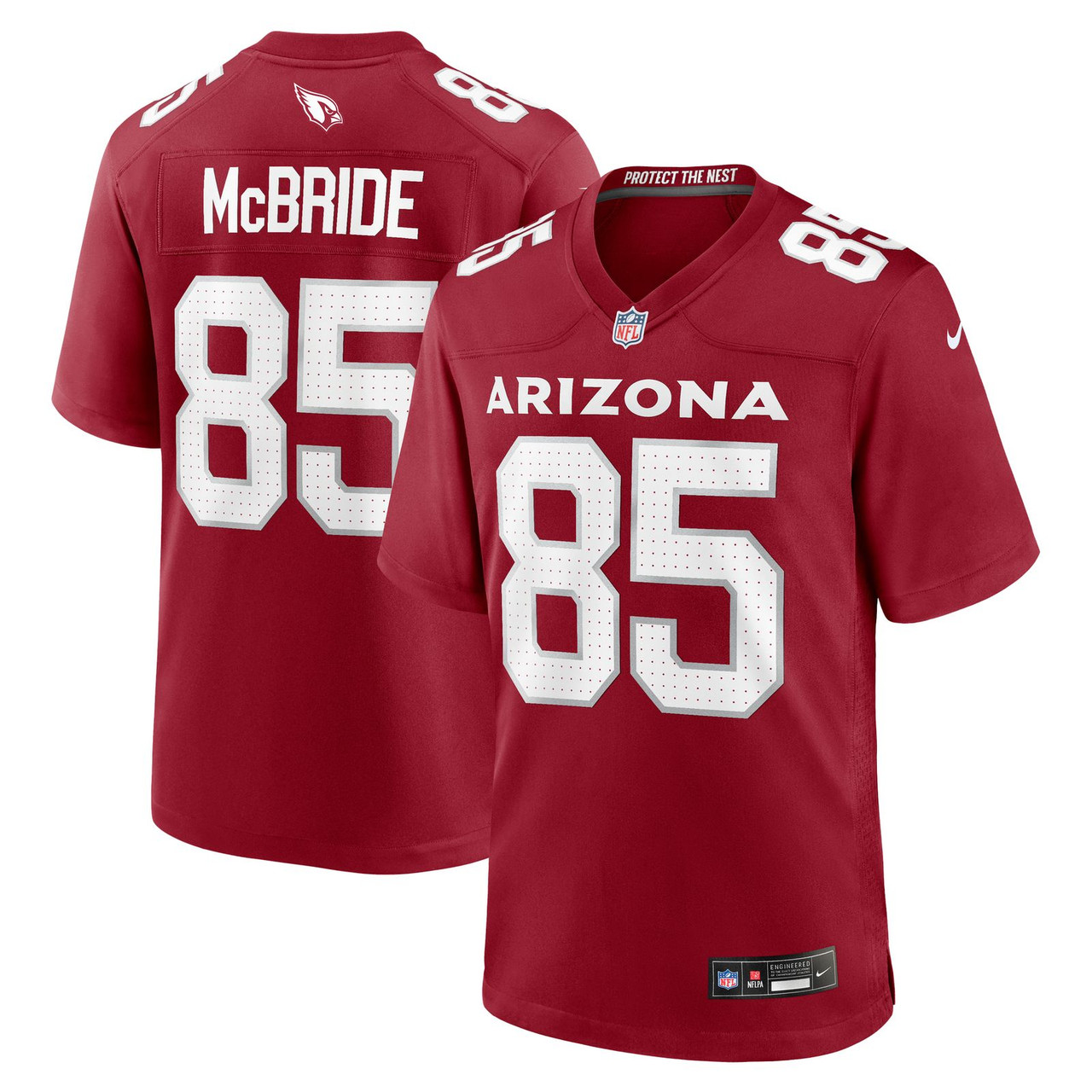
Today's red retail jersey may use a different design from the 2008 team's shirt. The Trey McBride catalog example is a modern comparison, not a Fitzgerald or Warner reproduction. Read the player, number, neckline and other stated details on an item before linking it to a particular season. A shared red base or a familiar bird emblem does not establish that a product matches every detail from XLIII.
Shop the look and keep the players' eras distinct
Explore the legends jersey collection for older player references, or browse Pat Tillman jerseys for a different Cardinals tribute. Tillman belongs to an earlier Arizona era and did not play in XLIII. A tribute to him should celebrate that player, rather than suggest membership in the Super Bowl team. The same principle applies to any later player's retail shirt.
The Cardinals uniform history guide covers the broader sequence of designs. Use the Super Bowl table for the result and the game color, then use the listing for the product's actual edition. For a concise display note, '2008 NFC champions, Super Bowl XLIII appearance in February 2009' preserves the achievement without labeling Arizona the winner. Check any throwback or patch claim separately.
Frequently asked questions
Did the Cardinals win the Super Bowl?
No. Arizona lost its only appearance, XLIII, to Pittsburgh 27–23.
When did the Cardinals win the Super Bowl?
They have not won it through LX. Their appearance followed the 2008 season and was played in February 2009.
What is the Cardinals' last Super Bowl win?
There is no last win. XLIII remains their only appearance through LX.
Do the Cardinals have any NFL championships?
Yes. The franchise's Chicago team won the NFL titles credited to 1925 and 1947, before the Super Bowl era.
What color did Arizona wear in XLIII?
Red jerseys with white pants. A later red retail shirt is not automatically a reproduction of that outfit.
Sources
Historical records reviewed October 28, 2026. Includes completed Super Bowls through LX; no prediction for the ongoing season.