

Bengals Super Bowl Wins: Three Appearances, No Titles
Posted by JerseyZenith on Oct 27th 2026
- Super Bowl record: 0–3 through LX.
- AFC championship seasons: 1981, 1988 and 2021.
- Latest appearance: February 13, 2022, ending the 2021 season.
- Black jerseys in XVI and LVI; white jerseys in XXIII.
A search for Cincinnati Bengals Super Bowl wins often means the reader remembers a deep playoff run and wants its year. The accurate answer separates reaching the game from winning it. Three AFC titles brought three appearances, each with a different Cincinnati team, and each ended in a loss. Here is how to recognize the games and their jersey eras.
Cincinnati Bengals Super Bowl record at a glance
| Super Bowl | Season / game date | Opponent | Score (team first) | Jersey color / style | Game MVP |
|---|---|---|---|---|---|
| Super Bowl XVI | 1981 / Jan. 24, 1982 | San Francisco 49ers | L 21–26 | Black; home-style | Joe Montana, 49ers |
| Super Bowl XXIII | 1988 / Jan. 22, 1989 | San Francisco 49ers | L 16–20 | White; away-style | Jerry Rice, 49ers |
| Super Bowl LVI | 2021 / Feb. 13, 2022 | Los Angeles Rams | L 20–23 | Black; home-style | Cooper Kupp, Rams |
The season is the football season being completed; the game takes place in the next calendar year. Home-style and away-style describe the jersey, not the Super Bowl venue. The MVP column records the game award, including opponents.
The first appearance: Ken Anderson's 1981 team
Cincinnati's first Super Bowl followed the 1981 season. Ken Anderson was the quarterback and Forrest Gregg the head coach. The Bengals reached the final after their AFC Championship victory over San Diego, the game remembered as the Freezer Bowl. Their first appearance was played indoors in Pontiac, Michigan, on January 24, 1982, rather than during the calendar year attached to the season.
San Francisco won XVI 26–21. Cincinnati recovered from a large halftime deficit but could not complete the comeback. Joe Montana received the game MVP award. Anthony Muñoz belonged to the offensive line of this first Super Bowl era and the later 1988 team; a photograph of him speaking decades afterward is a player illustration, not an image from either championship game.


The second 49ers meeting: the 1988 season and XXIII
The Bengals returned after the 1988 season with Boomer Esiason at quarterback and Sam Wyche as head coach. Super Bowl XXIII took place on January 22, 1989, in Miami. A late San Francisco touchdown turned Cincinnati's lead into a 20–16 defeat. The opponent was the same franchise as in XVI, but the season, venue and Bengals quarterback were different.
Jerry Rice was the game MVP, while Montana delivered the decisive touchdown pass to John Taylor. That distinction matters when discussing a famous quarterback's winning drive: the award is a separate fact. Cincinnati's second AFC championship did not become its first Super Bowl championship. The white jersey worn in XXIII gives this appearance a visibly different starting point from the team's two black-jersey finals.
Joe Burrow and the return in Super Bowl LVI
The 2021 Bengals brought Cincinnati back to the final, with Joe Burrow at quarterback and Ja'Marr Chase among his receivers. The game took place on February 13, 2022, at SoFi Stadium. Los Angeles won 23–20 after a late Matthew Stafford touchdown pass to Cooper Kupp and a defensive stop on Cincinnati's final possession. Kupp earned Super Bowl MVP.
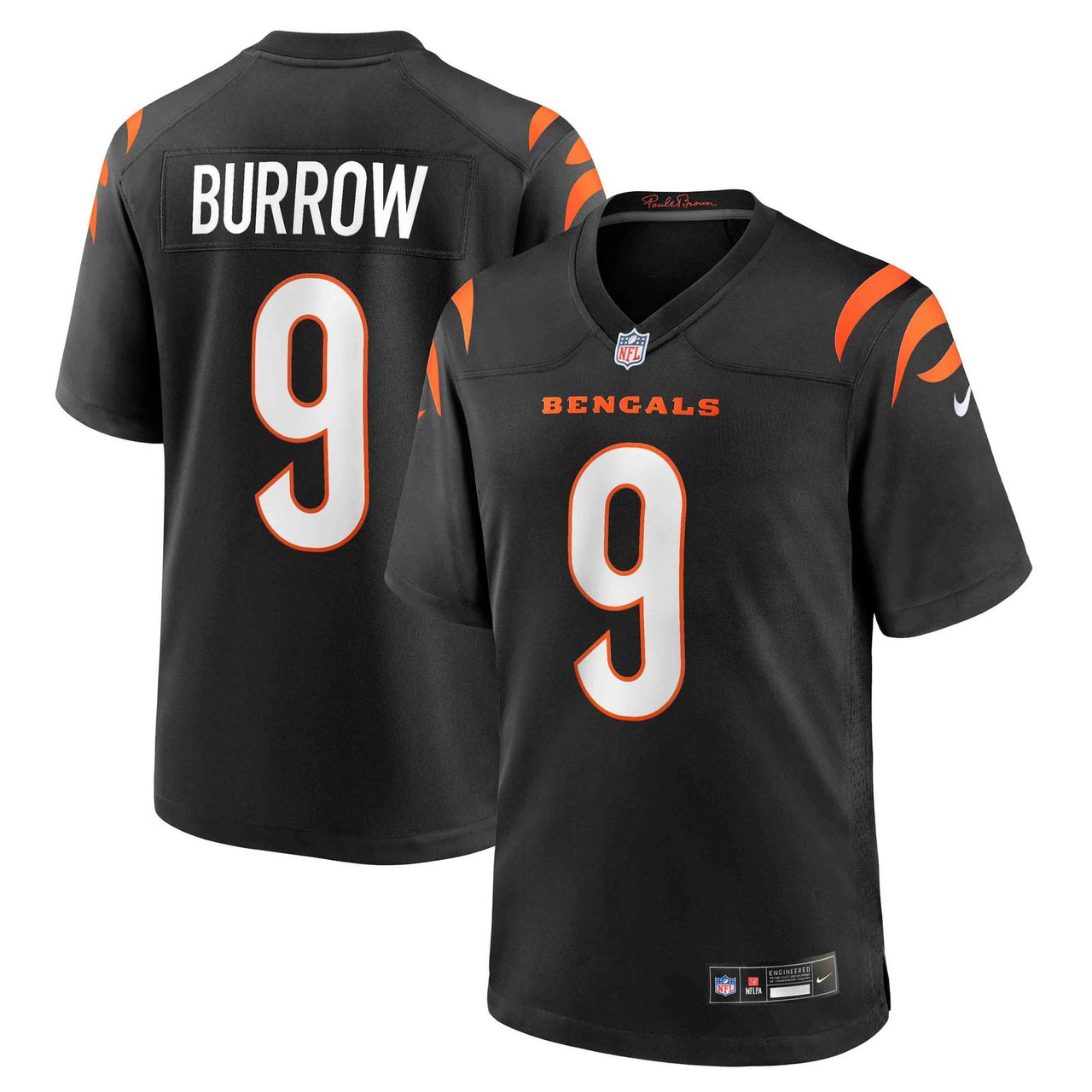
This is the Bengals' latest appearance through LX. It is sometimes remembered by the game year, 2022, even though the team represented the 2021 season. Burrow's run therefore belongs beside the Anderson and Esiason eras in the appearance record, without creating an entry in the wins column. A modern black Burrow jersey can evoke that team while still needing its own product description for edition details.
What they wore: black, white, then black
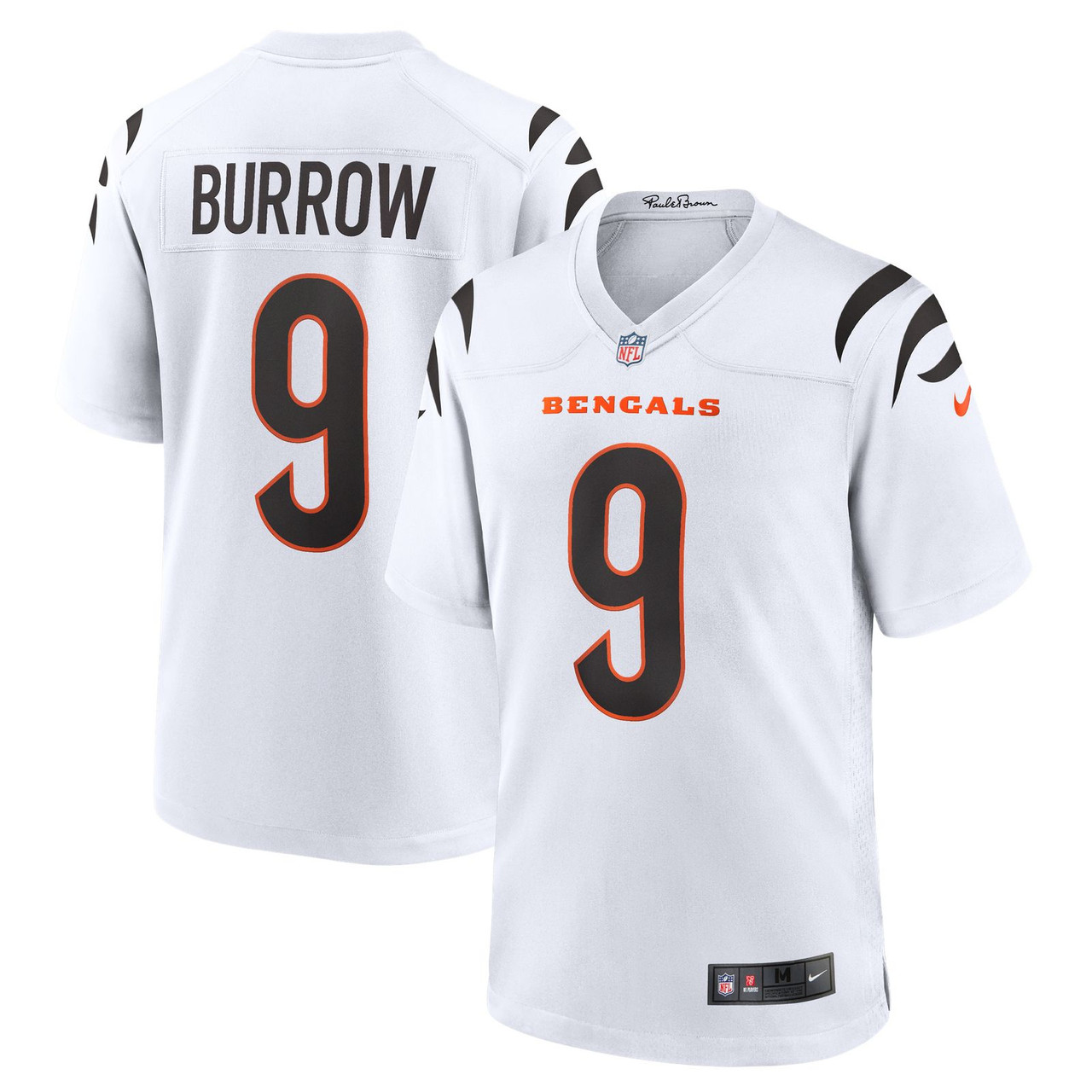
Cincinnati wore black jerseys and white pants in XVI, white jerseys in XXIII, and black jerseys with white pants in LVI. The team announced orange stripes on the white pants and orange socks for LVI. The resemblance between the first and third combinations is useful, but it does not make the modern cut, number treatment and details identical to the 1981 design.
Home and away are uniform shorthand, not directions to the venue. Cincinnati was the designated home team in LVI even though the game took place in the Rams' stadium. Record the actual color and Roman numeral when selecting a game-inspired look. A white Burrow retail jersey is a color comparison, not the black shirt worn in LVI or a reproduction of Esiason's XXIII outfit.
Shop the look without inventing a championship
Compare Joe Burrow jerseys with the Ja'Marr Chase collection for a player connection to the LVI team. A fan can celebrate reaching the Super Bowl without describing Cincinnati as its winner. For an older tribute, first decide whether the intended era is Anderson's 1981 season or Esiason's 1988 season, then check the listing's actual player and design.
The Bengals uniform history guide covers the wider sequence of design changes. Use it when comparing stripe placement and older styling rather than relying on one shared color. No Super Bowl appearance, player name or stock product image by itself proves that a retail shirt includes the historical game patch or duplicates every on-field detail.
Frequently asked questions
How many Super Bowls did the Bengals win?
None through LX. They have appeared three times and lost all three.
When did the Bengals win the Super Bowl?
They have not won it. Their appearances followed the 1981, 1988 and 2021 seasons.
Did the Bengals win the Super Bowl in 2022?
No. The Rams beat Cincinnati 23–20 in LVI on February 13, 2022.
What is the Bengals' last Super Bowl win?
There is no last win. LVI is their latest appearance, and it ended in defeat.
Which Bengals Super Bowl used white jerseys?
XXIII, played in January 1989. Cincinnati wore black in XVI and LVI.
Sources
- Cincinnati Bengals Hof
- Bengals 80S
- Bengals Lvi Recap
- Bengals Lvi Uniform
- Game Xvi
- Game Xxiii
- Game Lvi
- Mvp Record
Historical records reviewed October 28, 2026. Includes completed Super Bowls through LX; no prediction for the ongoing season.