
Best Buccaneers Players Of All Time: Our Top 10
Posted by JerseyZenith on Oct 27th 2026
- Ten players, ranked by franchise-only performance across positions and eras.
- Performance cutoff: the completed 2025 season; no unfinished 2026 statistics or projected achievements.
- Canton and other honors reviewed separately through October 27, 2026.
- Jersey numbers identify documented use at this franchise; team years distinguish active and reserve status where relevant.
Tampa Bay’s strongest cases include an expansion-era defender, two championship generations and modern offensive consistency. The ranking compares their actual Buccaneers work, keeping worldwide fame and achievements for other teams outside the calculation.
Our top 10 at a glance: rank, position and franchise achievement
| Rank | Player | Position | Team years | Jersey number(s) | Franchise achievement |
|---|---|---|---|---|---|
| 1 | Derrick Brooks | LB | 1995–2008 | 55 | 2002 AP Defensive Player of the Year; Super Bowl XXXVII champion |
| 2 | Lee Roy Selmon | DE | 1976–1984 | 63 | 1979 AP Defensive Player of the Year |
| 3 | Warren Sapp | DT | 1995–2003 | 99 | 1999 AP Defensive Player of the Year; Super Bowl XXXVII champion |
| 4 | Ronde Barber | CB | 1997–2012 | 20 | 47 interceptions and 28 sacks with Tampa Bay |
| 5 | Mike Evans | WR | 2014–2025 in this review | 13 | Eleven consecutive 1,000-yard receiving seasons through 2024 |
| 6 | Lavonte David | LB | 2012–2025 in this review | 54 | 2013 AP first-team All-Pro; Super Bowl LV champion |
| 7 | John Lynch | S | 1993–2003 | 47 | Five Pro Bowls as a Buccaneer; Super Bowl XXXVII champion |
| 8 | Tom Brady | QB | 2020–2022 | 12 | Super Bowl LV MVP; 40 touchdown passes in 2020 |
| 9 | Mike Alstott | FB | 1996–2006 active; 2007 injured reserve | 40 | Six Pro Bowls; Super Bowl XXXVII champion |
| 10 | James Wilder | RB | 1981–1989 | 32 | 1,544 rushing yards and 685 receiving yards in 1984 |
How we ranked these players
The criteria are dominance relative to era and position, sustained Buccaneers value, individual recognition and postseason contribution. A short championship peak can earn a place, but it does not erase the achievements of a player who supplied elite work for a decade. Legacy explains close decisions without producing a made-up points table.
The Buccaneers’ official 2025 Top 50 used its own fan, media and committee process. It is an attributed historical reference for candidates, not the order reproduced here. Our placing of Brady below several long careers makes the longevity weighting explicit: his Tampa Bay title and performance count, while New England achievements do not. Playing comparisons stop at the completed 2025 season. Honors and Canton membership are checked separately through October 27, 2026, with no assumption that an active player’s future production has already occurred.
The 10 greatest Tampa Bay Buccaneers players
1. Derrick Brooks
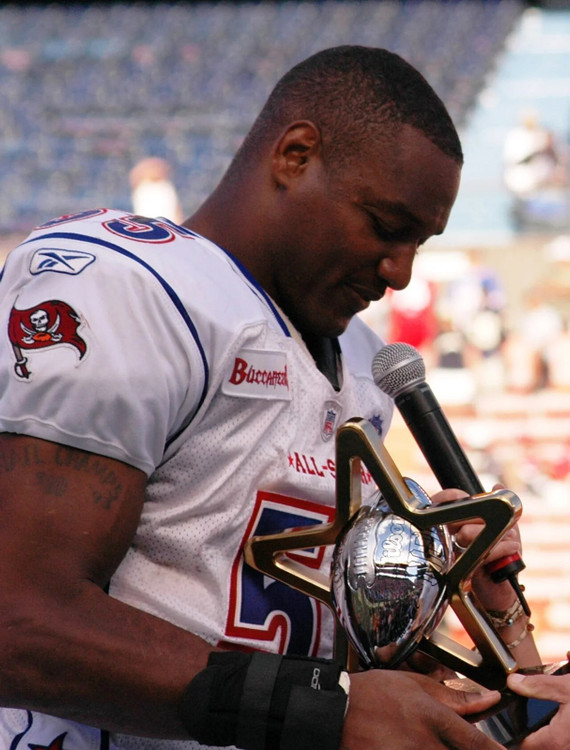
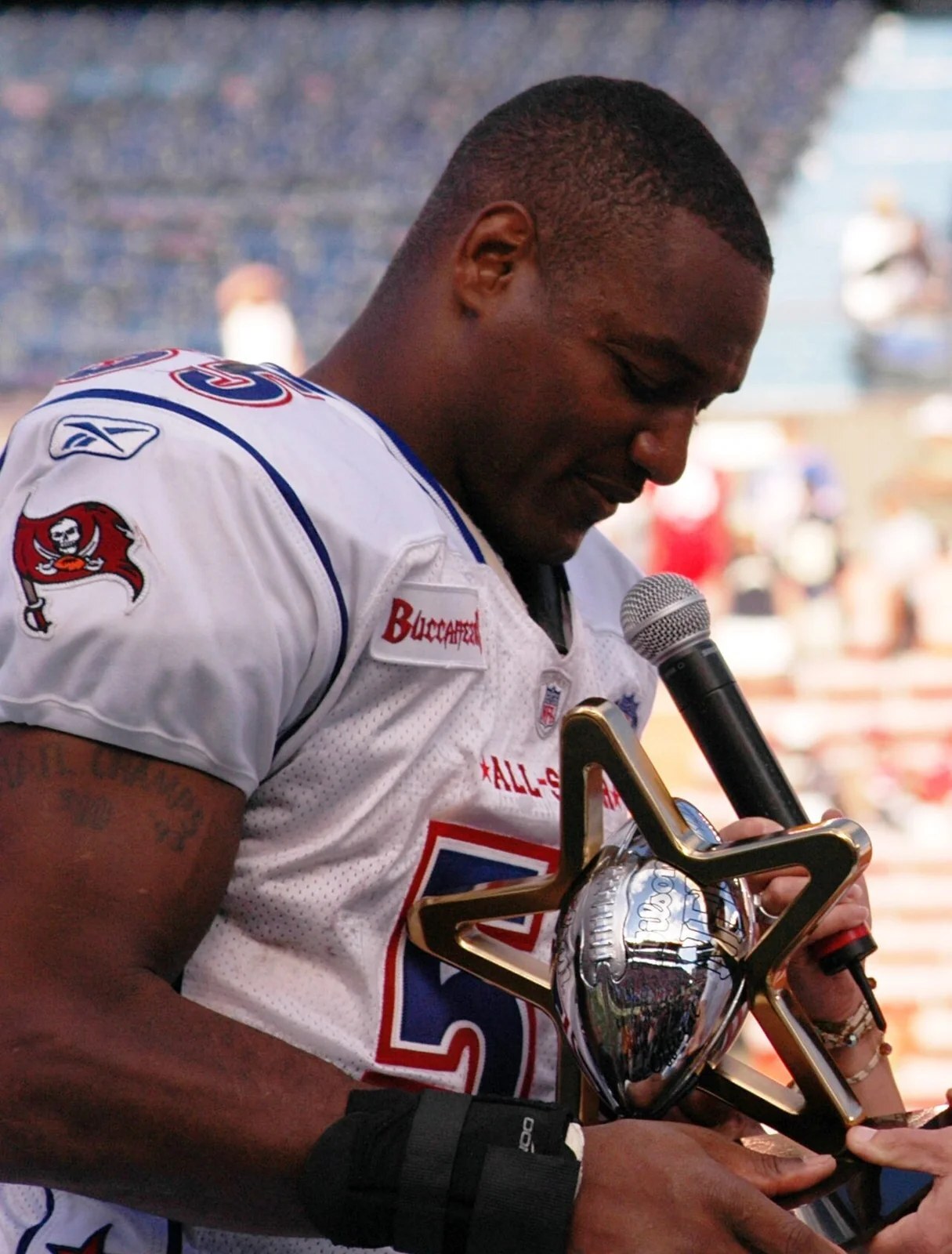
Brooks leads because Tampa Bay received a long career of elite linebacker play capped by a championship season at the height of his powers. The 2002 AP Defensive Player of the Year award establishes the individual peak, and his work in coverage helped make the defense more than a pass rush. Every NFL playing season belonged to the Buccaneers. Selmon offers the franchise’s foundational defensive standard, but Brooks combines a longer career with greater postseason contribution. That balance earns first place without assigning one defender sole credit for an outstanding unit.
2. Lee Roy Selmon
Selmon ranks second because he established an elite standard while the expansion franchise was still building its competitive identity. The 1979 AP Defensive Player of the Year award and Tampa Bay’s first deep playoff run show that his career cannot be described only as pioneering symbolism. His pressure and strength mattered against the competition of his own time. Brooks receives the edge for longer sustained service and a championship contribution. Selmon’s placement above later champions makes the criteria explicit: a player can be a franchise great without winning a Super Bowl.
3. Warren Sapp
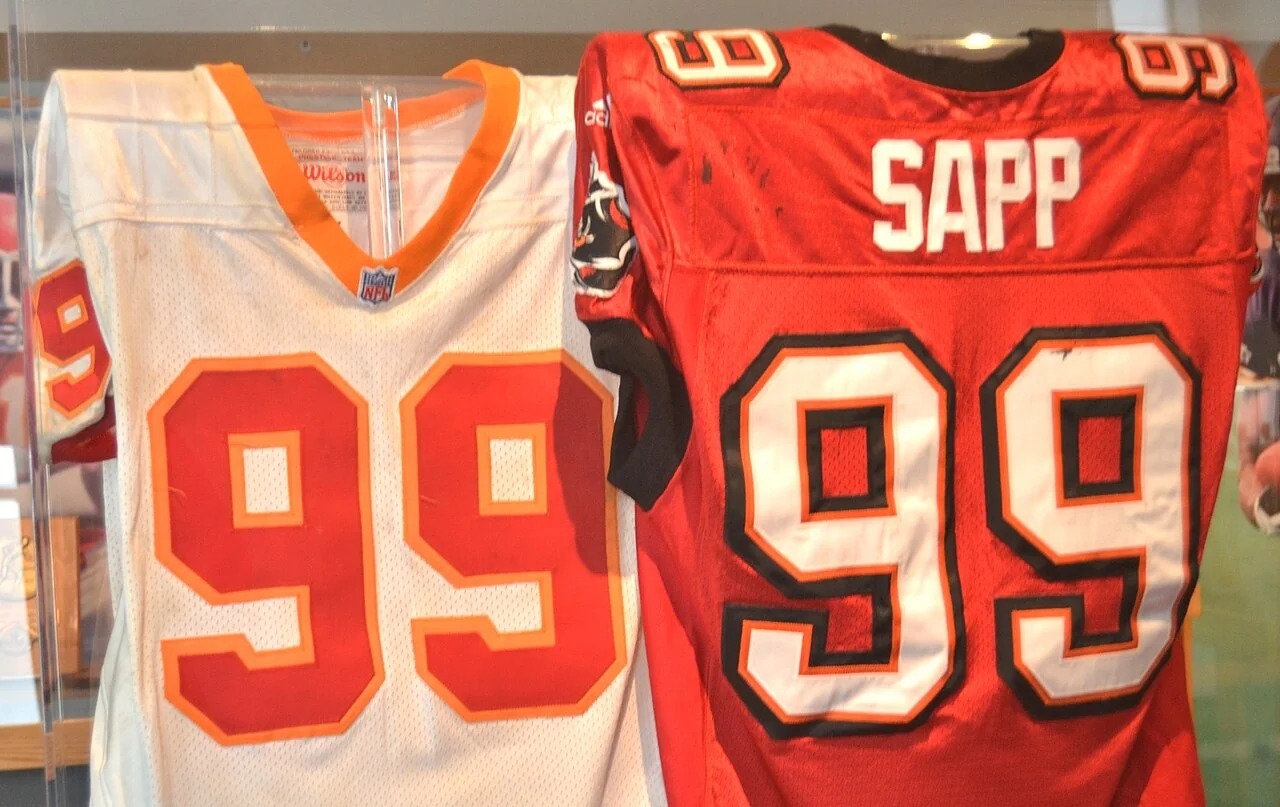
Sapp’s interior pressure changed the geometry of Tampa Bay’s defense. His 1999 AP Defensive Player of the Year award provides the clearest peak marker, while the Super Bowl XXXVII season adds direct postseason achievement. We exclude the later Oakland years and compare only his nine Buccaneers seasons. Selmon wins a close decision for the degree to which he elevated an emerging franchise, while Brooks offers a longer sustained case. Sapp remains third because his best Tampa Bay work stands among the strongest position-level performances in the team’s history.
4. Ronde Barber
Barber’s sixteen-season Buccaneers career combines longevity with unusual positional breadth. His 47 interceptions and 28 sacks demonstrate why coverage totals alone would understate the value of his role. The playoff interception against Philadelphia remains a defining championship moment, but the larger body of work carries this ranking. He sits just behind Sapp because we give the defensive tackle’s highest individual peak a small advantage. Against shorter careers, Barber gains ground through durability, adaptability and years of contribution to the same franchise, rather than through a single remembered play.
5. Mike Evans
Evans reaches fifth on completed performance, including the eleven consecutive 1,000-yard receiving seasons established from 2014 through 2024. That record of consistency is especially meaningful across changes at quarterback and in the surrounding offense. The Super Bowl LV championship adds postseason value, while his production demonstrates that the career was not created by one passer. We stop the comparison at the completed 2025 season and do not project future milestones. The four defenders above offer stronger overall position-level peaks or longer established careers, but Evans already has a persuasive place among them.
6. Lavonte David
David’s ranking reflects sustained linebacker value across very different Buccaneers teams. His 2013 AP first-team All-Pro season establishes an early peak, while the Super Bowl LV run gives him a later championship contribution. We evaluate the completed Tampa Bay seasons through 2025 and avoid using any unfinished 2026 totals. Evans narrowly wins their comparison because of the exceptional receiving consistency over many seasons. David’s range and responsibility on defense make a strong counterargument, especially for a ranking that gives more weight to performance on teams that were not always contenders.
7. John Lynch
Lynch provides another essential piece of the first championship defense, with five Pro Bowls earned during his eleven Tampa Bay seasons. His tackling and communication helped connect the secondary to the front seven, a contribution that interception totals alone cannot describe. The later Denver honors are excluded. We put David slightly higher because of the longer Buccaneers body of work, while Lynch’s sustained peak and championship responsibility keep him above the shorter offensive tenures below. The comparison is about Tampa Bay service, rather than the total honors attached to each player’s NFL biography.
8. Tom Brady
Brady presents the clearest test of the franchise-only rule. We count three Tampa Bay seasons, the Super Bowl LV championship and MVP award, and the high-level passing that helped make the offense immediately productive. We do not import the New England championships or the rest of his NFL résumé. That produces eighth place: an enormous short-term impact, but much less accumulated Buccaneers value than the careers above. He could rank higher under a peak-and-postseason model. This ordering deliberately balances that championship transformation against the work of players who sustained the franchise over many years.
9. Mike Alstott
Alstott earns ninth because his role combined power running, receiving and blocking over a long Buccaneers career. Six Pro Bowls recognize that contribution even though a fullback’s workload differs from a feature back’s. We distinguish his last active playing season in 2006 from the 2007 injured-reserve season, rather than implying another year of on-field production. Brady receives the edge for the extraordinary championship impact at quarterback. Alstott remains ahead of Wilder because we value the repeated high-level recognition and his role in the franchise’s first championship offense.
10. James Wilder
Wilder’s 1984 season is a useful reminder that a player can carry enormous offensive responsibility on a team outside the championship spotlight. His 1,544 rushing yards and 685 receiving yards show the breadth of that workload. We count his Tampa Bay years and leave later stops out of the comparison. He finishes tenth because the players above combine stronger sustained peaks, greater longevity or more postseason value. His inclusion still gives a losing-era offensive star a fair hearing, rather than allowing the two Super Bowl periods to occupy every place by default.
Wear their legacy
Selmon’s early-franchise look and the defensive stars of the first Super Bowl era tell different parts of Tampa Bay’s story. The Buccaneers throwback collection lets the era guide the browsing, while the legends jersey hub offers another historical route. The football ranking does not certify that a particular name or edition is currently listed.
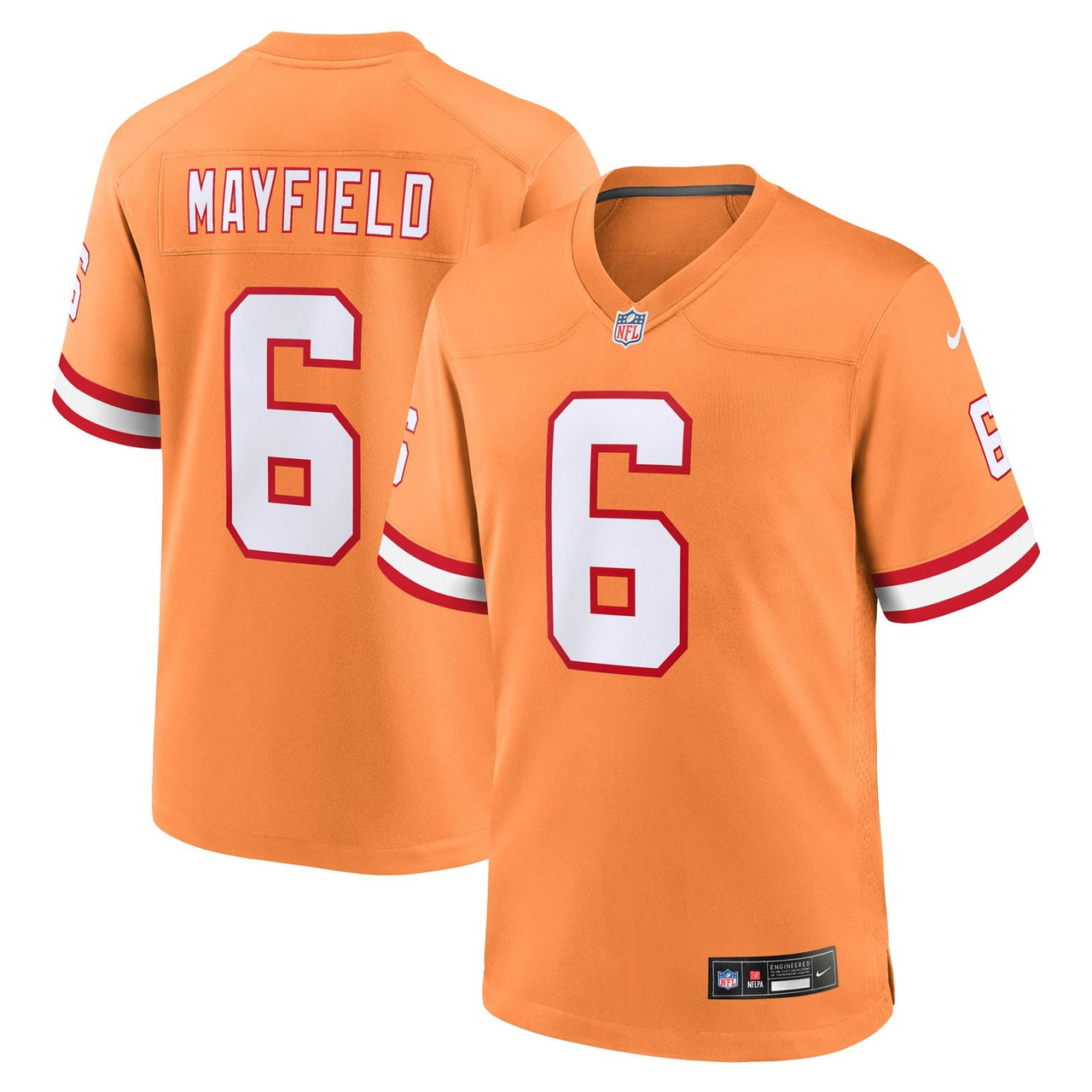
When comparing modern Nike styles with an older Buccaneers design, check the colors, number and product description together. A historical name does not guarantee an exact reproduction of an earlier uniform. For retired numbers and the different systems of recognition, consult the Buccaneers jersey numbers guide; that reference has a different purpose from evaluating ten playing careers.
Frequently asked questions
Why is Derrick Brooks the first choice?
Brooks combines fourteen Buccaneers seasons, an AP Defensive Player of the Year peak and direct contribution to the Super Bowl XXXVII title. Selmon is a strong alternative if foundational impact receives the greatest weight.
Where does Tom Brady rank as a Buccaneer?
He is eighth under this rubric. Three Tampa Bay seasons, a championship and Super Bowl MVP make an exceptional short tenure, but the ranking also rewards the long franchise careers above him. His Patriots achievements add no credit here.
Are these the best Tampa Bay Buccaneers players of all time according to the official Top 50?
This is our own editorial top ten. The team’s 2025 Top 50 is a separate selection with its own process and date; it supplies context and candidate evidence rather than an automatically updated order.
How are Evans and David evaluated?
Their completed Tampa Bay performance through 2025 qualifies without a Canton requirement. The cited milestones are dated, and no unfinished 2026 totals or projected future achievements are used.
Sources
- Buccaneers official 2025 Top 50, selection context and careers
- Buccaneers 50-season history
- Canton profile: Derrick Brooks
- Canton profile: Lee Roy Selmon
- Canton profile: Warren Sapp
- Canton profile: Ronde Barber
- Canton profile: John Lynch
- Official 2025 Tampa Bay Buccaneers media guide: franchise careers, numbers and records
Sources checked October 27, 2026. Performance comparisons stop at the completed 2025 season; Canton membership reflects completed induction classes through 2026.