
Best Dolphins Players of All Time: Our Top 10
Posted by JerseyZenith on Oct 27th 2026
- Ten players ranked for on-field contribution at this franchise.
- Performance cutoff: the completed 2025 season; unfinished 2026 results and projections are excluded.
- Honors reviewed separately through October 27, 2026.
- Team years describe franchise tenure; reserve years are labeled. Numbers are documented representative team numbers, not an exhaustive uniform index.
Miami’s greatest careers span the perfect-season champions, Marino’s passing revolution and a later defense led by Taylor and Zach Thomas. A quarterback can lead the list without turning every comparison into a contest over passing yards.
Our top 10 at a glance
| Rank | Player | Position | Team years | Jersey number(s) | Franchise achievement |
|---|---|---|---|---|---|
| 1 | Dan Marino | QB | 1983–1999 | 13 | 1984 NFL MVP; 5,084 passing yards and 48 TDs that season |
| 2 | Jason Taylor | DE | 1997–2007; 2009; 2011 | 99 | 2006 NFL Defensive Player of the Year |
| 3 | Larry Little | G | 1969–1980 | 66 | Five Pro Bowls; key blocker for back-to-back champions |
| 4 | Dwight Stephenson | C | 1980–1987 | 57 | Five straight Pro Bowl selections; two Super Bowl appearances |
| 5 | Zach Thomas | LB | 1996–2007 | 54 | Five first-team All-Pro selections; seven Pro Bowls |
| 6 | Larry Csonka | FB | 1968–1974; 1979 | 39 | Super Bowl VIII MVP; two Miami championships |
| 7 | Bob Griese | QB | 1967–1980 | 12 | Starting quarterback in Super Bowl VII and VIII victories |
| 8 | Jim Langer | C | 1970–1979 | 62 | Four first-team All-Pro selections; six Pro Bowls |
| 9 | Paul Warfield | WR | 1970–1974 | 42 | Five Miami Pro Bowls; deep threat for two champions |
| 10 | Bob Kuechenberg | G/T | 1970–1984; 1984 injured reserve | 67 | Six Pro Bowls; blocker on both Miami title teams |
How we ranked these players
The ranking criteria balance peak, longevity, position, era, All-Pro recognition and postseason contribution. Team success is shared; no numerical scoring formula is claimed.
Miami’s perfect 1972 season and repeat championship in 1973 supply essential context, but those team achievements do not settle every individual comparison. Marino receives credit for changing what the passing offense could produce; the linemen receive their own credit for making a different offensive approach work. Players are compared with contemporaries at the same position before we compare their overall franchise value. This keeps a center’s contribution visible alongside a quarterback’s statistics.
The 10 greatest Miami Dolphins players
1. Dan Marino
Marino takes first because Miami received both a transformative peak and seventeen seasons of quarterback value. His 1984 MVP campaign produced 5,084 passing yards and 48 touchdowns, extraordinary production in that passing environment. The resulting AFC championship matters, even though the Dolphins lost Super Bowl XIX. His place does not depend on counting a title he never won. Compared with Taylor, Marino has the longer franchise career and the greater sustained offensive responsibility. His entire NFL playing career belongs to Miami, so no outside production inflates the case.
2. Jason Taylor
Taylor earns second through a defensive peak that remained valuable across separate Miami stints. The 2006 Defensive Player of the Year award anchors his case, while his 18.5 sacks in 2002 show that the pass-rush excellence was not confined to one season. His Washington and Jets work is excluded. We place him above the championship-era linemen because his individual defensive impact was so commanding, while the longer Miami record separates him from shorter peak specialists. Marino stays ahead on the combination of franchise longevity and offensive influence.
3. Larry Little
Little ranks third because a comparison across positions must recognize the player creating space as well as the player carrying the ball. His guard play was central to Miami’s championship rushing offense, and five Pro Bowl selections support the assessment beyond team success. The San Diego years do not count here. His longer Miami run gives him an advantage over Stephenson, whose best seasons offer a strong competing peak. Little also ranks above Csonka because we give independent credit to the line that sustained the ball-control approach.
4. Dwight Stephenson
Stephenson’s fourth place is driven by exceptional quality at center rather than a long accumulation of seasons. His five consecutive Pro Bowl selections and role in two Super Bowl appearances identify a sustained elite stretch. His blocking helped the passing offense function, giving him a different claim from the earlier championship line. Injury shortened his career, and our criteria leave that lost time unfilled rather than projecting additional honors. Little receives the longevity advantage; Stephenson stays above several longer careers because his position-level peak was unusually strong.
5. Zach Thomas
Thomas places fifth for twelve Miami seasons of high-level linebacker play, supported by five first-team All-Pro selections and seven Pro Bowls. He offered a sustained standard in the middle of the defense while Taylor attacked from the edge. His final Dallas season adds nothing to this ranking. We give Stephenson the narrow advantage in peak dominance at his own position, but Thomas has the stronger longevity case. He also shows why a championship ring is not an entry requirement: repeated individual excellence can establish a franchise legacy without one.
6. Larry Csonka
Csonka is sixth because his power running translated Miami’s offensive identity into decisive postseason production. In Super Bowl VIII, he rushed for 145 yards and two touchdowns and earned the game’s MVP award. His earlier Miami tenure and final return in 1979 count; the WFL and Giants periods do not. The championship performance gives him an edge over several longer-serving candidates. The players above him receive more weight for sustained individual superiority across their positions, so a memorable title game strengthens his case without determining the entire order.
7. Bob Griese
Griese ranks seventh as the quarterback who helped guide the championship offense without requiring Marino-like passing volume. His judgment mattered within an attack built around running, and he started both Super Bowl victories. The perfect 1972 season was a shared quarterback story: injury kept him out for much of it, and he returned for the closing championship games. That context avoids assigning him every win alone. Csonka receives a narrow postseason-peak advantage here, while Griese’s longer service keeps him ahead of the remaining offensive specialists.

8. Jim Langer
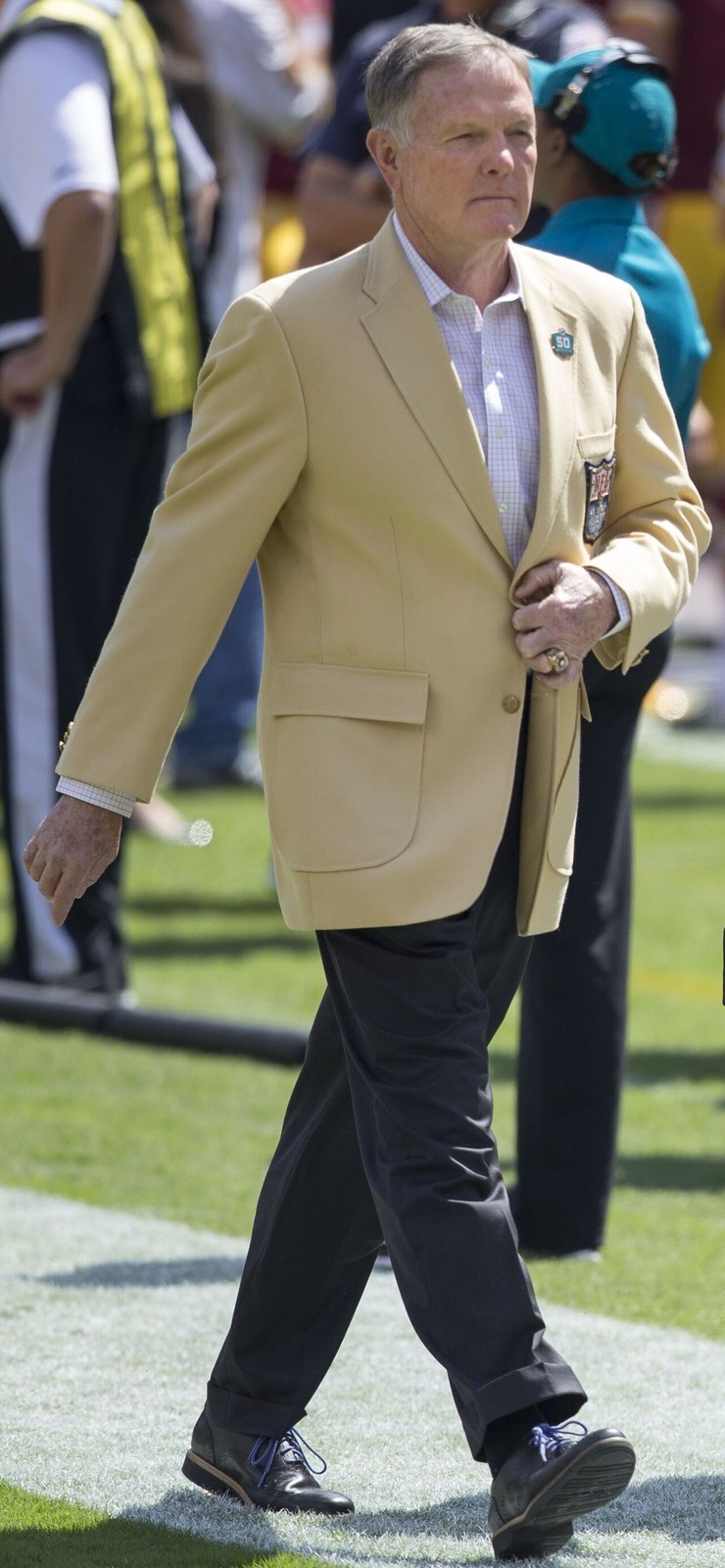
Langer’s eighth place recognizes the center who became a fixture in Miami’s championship offense. He played every offensive down of the perfect 1972 season and developed a sustained record of individual recognition, including four first-team All-Pro selections. His Minnesota years are excluded. Little’s longer Dolphins tenure and Stephenson’s higher center peak place them above him, while Langer’s combination of championship responsibility and repeated excellence keeps him securely in the ten. He is evaluated as an individual blocker, not simply included because his teammates won titles.
9. Paul Warfield
Warfield is ninth because five Miami seasons supplied exceptional receiving value within an offense that did not need frequent passing. His deep threat changed how opponents could defend the run, making raw reception totals a poor standalone measure. Five Miami Pro Bowl selections help establish that contemporary standing. His extensive Cleveland achievements are excluded, which is why his overall NFL reputation cannot automatically lift him above longer Dolphins careers. Langer’s additional seasons break the close comparison here; Warfield’s concentrated impact keeps him ahead of the final longevity selection.
10. Bob Kuechenberg
Kuechenberg completes the ten through durable line play that connected the early champions to later Miami teams. Six Pro Bowl selections show that the case extends beyond being present for famous victories. His official service span includes 1984 on injured reserve, so that year is not credited as another playing season. Number 67 is the representative Miami number shown here. Warfield wins the close comparison on concentrated offensive impact; Kuechenberg earns this final place through longevity, versatility at guard and tackle, and a substantial championship-era contribution.
The best Dolphins defensive players of all time
The best Dolphins defensive players of all time in this top ten are Jason Taylor and Zach Thomas. Taylor gets the edge for his pass-rushing peak, including the 2006 Defensive Player of the Year award; Thomas supplies the stronger case in sustained middle-linebacker recognition. That is a comparison of different jobs, not an assertion that tackles and sacks are interchangeable. The championship defense also produced serious candidates outside this ten, so its absence from the highest defensive places should not be read as an assessment of the unit’s quality.
Wear their legacy
Griese and Csonka connect a jersey choice to the early championship offense; Marino points toward Miami’s later passing identity. The number is a useful starting point, but the era, sleeve treatment and product description determine how closely a modern tribute resembles the uniform a player actually wore. A throwback label alone does not establish that a garment reproduces every historical detail.
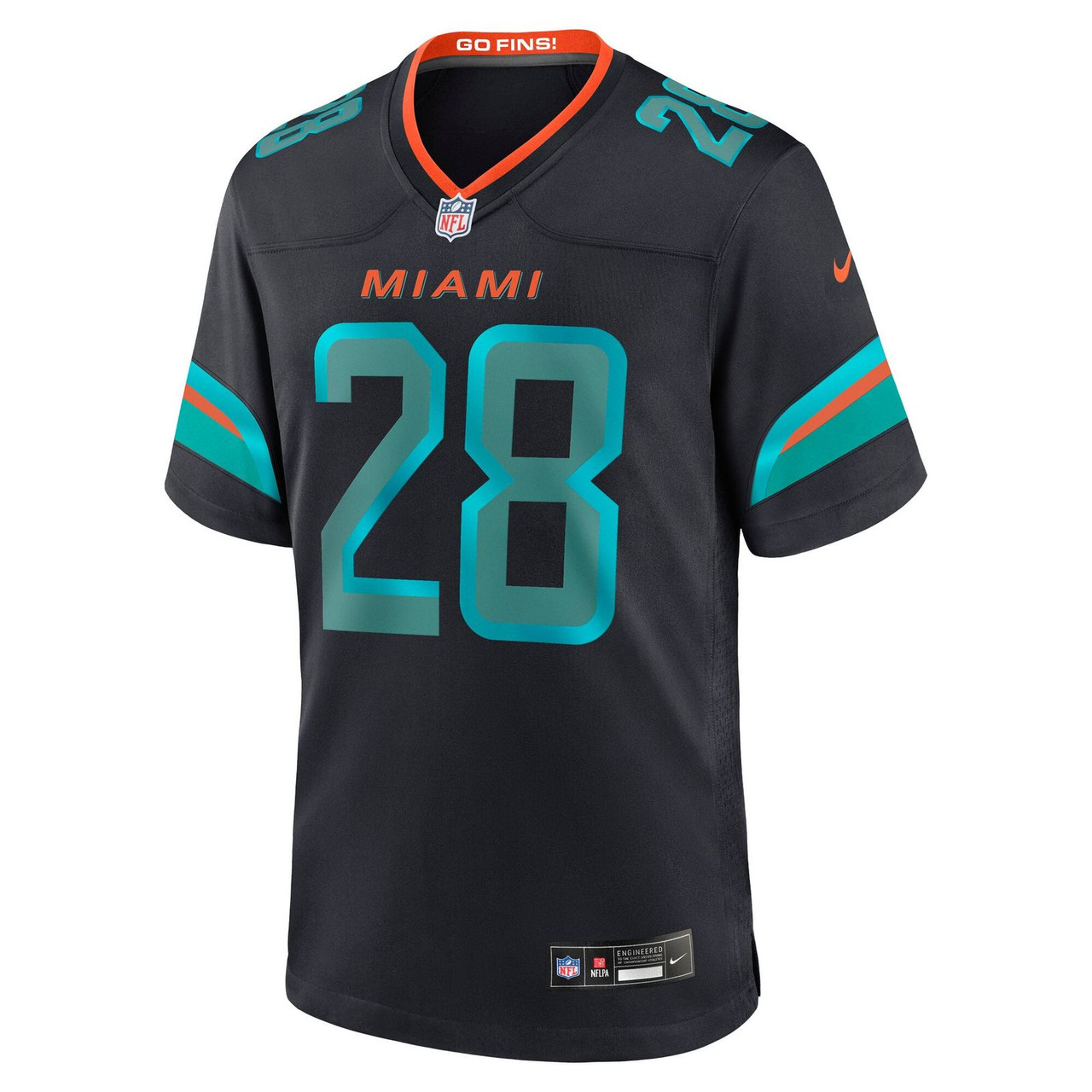
Compare the Dolphins home jersey collection with the legends jersey hub. Ranking position does not imply every player’s jersey is stocked; verify the individual listing.
The Miami Dolphins jersey numbers guide covers recognition and number policy. A modern Nike edition can honor a legacy without reproducing historical construction.
Frequently asked questions
Who leads our best Miami Dolphins players of all time list?
Dan Marino leads on his Miami-only passing peak and seventeen seasons of value. His 1984 MVP season provides the clearest single-season argument. The choice does not require a Super Bowl victory, and his loss in Super Bowl XIX is not presented as a championship win.
Why is Larry Little ahead of Dwight Stephenson?
Little combines elite line play with a longer Miami tenure and the early championship teams. Stephenson has a powerful peak argument at center. Our criteria give Little the narrow advantage for accumulated franchise value, while acknowledging that a peak-focused ranking could reverse them.
Are team years and jersey numbers complete uniform histories?
Team years identify franchise service, with reserve status explained when it matters. Numbers are documented representative Miami numbers, rather than a promise to list every preseason or early-career variation. Kuechenberg’s final year is distinguished from seasons in which he appeared in games.
Is this an official order of the Dolphins’ best players of all time?
No. The numbered order is our editorial assessment. Official profiles establish facts, while Canton membership and team honors answer separate questions. We review completed performance through 2025 and honors through October 27, 2026; ongoing 2026 results receive no projected full-season credit.
Sources
- Official career profile: Dan Marino
- Official career profile: Jason Taylor
- Official career profile: Larry Little
- Official career profile: Dwight Stephenson
- Official career profile: Zach Thomas
- Official career profile: Larry Csonka
- Official career profile: Bob Griese
- Official career profile: Jim Langer
- Official career profile: Paul Warfield
- Official career profile: Bob Kuechenberg
- Canton jersey-number index: representative numbers
- Dolphins official Kuechenberg career review
- Dolphins 1986 numbered roster
- Dolphins 2025 media guide: historical roster