
Best Texans Players of All Time: Our Top 10
Posted by JerseyZenith on Oct 27th 2026
- Ten players ranked for on-field contribution at this franchise.
- Performance cutoff: the completed 2025 season; unfinished 2026 results and projections are excluded.
- Honors reviewed separately through October 27, 2026.
- Team years describe franchise tenure; reserve years are labeled. Numbers are documented representative team numbers, not an exhaustive uniform index.
Houston’s NFL expansion franchise began play in 2002. Its first contenders were built around an elite receiver, a productive running game and a defense transformed by Watt; this list assesses those contributions without importing the Oilers’ separate history.
Our top 10 at a glance
| Rank | Player | Position | Team years | Jersey number(s) | Franchise achievement |
|---|---|---|---|---|---|
| 1 | J.J. Watt | DE | 2011–2020 | 99 | Three AP Defensive Player of the Year awards |
| 2 | Andre Johnson | WR | 2003–2014 | 80 | 1,012 Houston receptions; receiving-yardage titles in 2008 and 2009 |
| 3 | DeAndre Hopkins | WR | 2013–2019 | 10 | 632 catches and 8,602 receiving yards for Houston |
| 4 | Arian Foster | RB | 2009–2015 | 23 | 2010 NFL rushing champion with 1,616 yards |
| 5 | Duane Brown | LT | 2008–2017 | 76 | First-team All-Pro for the 2012 season |
| 6 | Johnathan Joseph | CB | 2011–2019 | 24 | 17 interceptions and 118 passes defensed as a Texan |
| 7 | Mario Williams | DE/OLB | 2006–2011 | 90 | 53 Houston sacks; two Pro Bowls as a Texan |
| 8 | Matt Schaub | QB | 2007–2013 | 8 | 23,221 passing yards and 124 passing TDs for Houston |
| 9 | DeMeco Ryans | LB | 2006–2011 | 59 | 2006 AP Defensive Rookie of the Year; two Houston Pro Bowls |
| 10 | Owen Daniels | TE | 2006–2013 | 81 | 385 receptions, 4,617 receiving yards and two Houston Pro Bowls |
How we ranked these players
The ranking criteria balance peak, longevity, position, era, All-Pro recognition and postseason contribution. Team success is shared; no numerical scoring formula is claimed.
The Texans’ history starts with the 2002 expansion team. Earl Campbell, Warren Moon and other Houston Oilers greats belong to the franchise that became the Tennessee Titans, so they are outside this comparison. Within the Texans’ shorter history, a great season still needs to be weighed against several years of value. That gives long-serving blockers and defenders a fair comparison with quarterbacks and receivers whose best highlights are more visible. A division championship and a playoff victory also remain distinct achievements.
The 10 greatest Houston Texans players
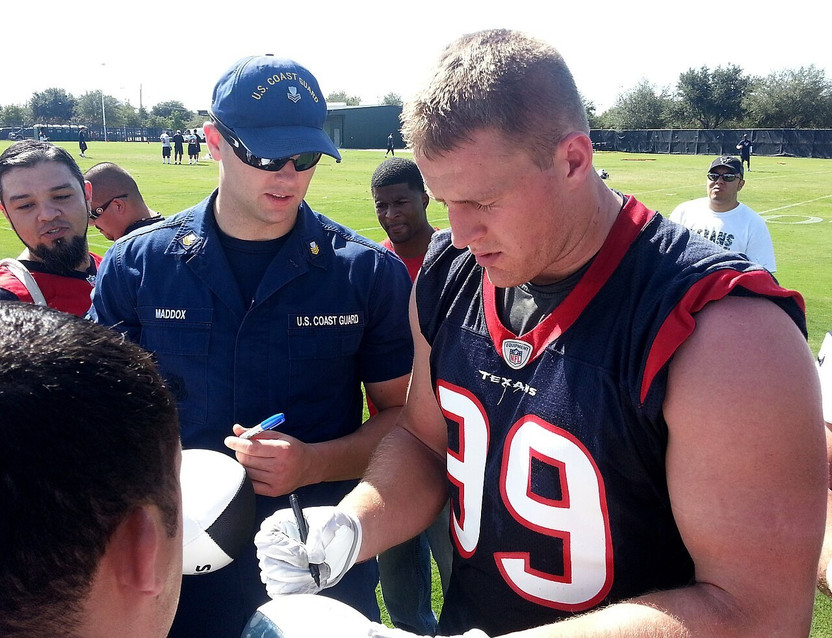
1. J.J. Watt
Watt ranks first because his Houston peak changed the standard for defensive greatness within the franchise. Three AP Defensive Player of the Year awards supply a clear comparison against the strongest offensive candidates, and ten Texans seasons make the case substantial beyond a short burst. His later Arizona work is excluded. Johnson has the longer Houston tenure, but Watt’s repeated league-wide superiority at his position wins our first-place decision. The ranking rewards what he did on the field; community recognition and later team honors are not substitutes for that playing contribution.
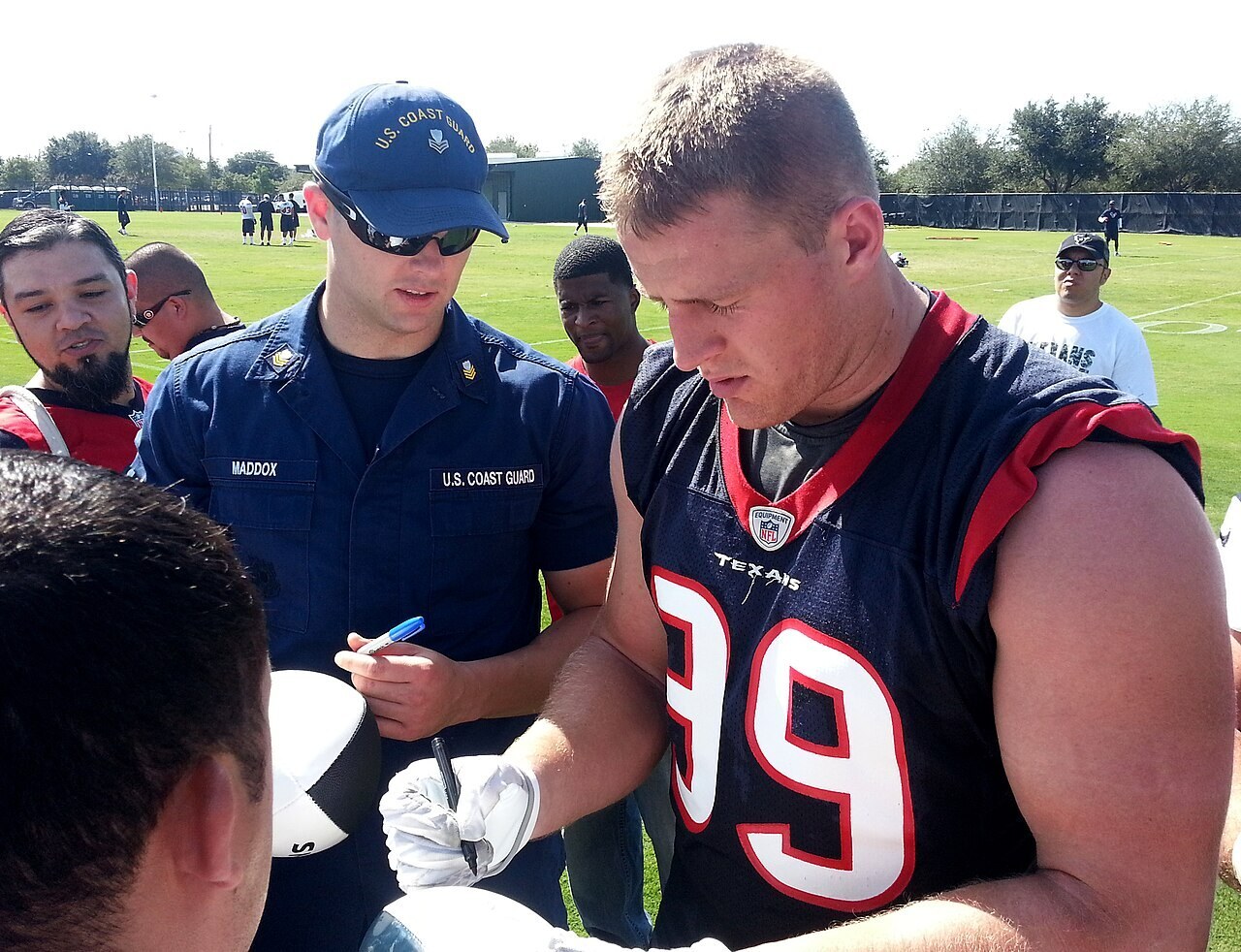

2. Andre Johnson
Johnson is second for the way twelve Houston seasons combined high-end receiving production with franchise continuity. His 1,012 Texans receptions and receiving-yardage titles in 2008 and 2009 establish both accumulated value and peak. His later Colts and Titans seasons do not count. Watt gets the edge for repeated defensive dominance, but Johnson’s greater longevity makes the comparison close. He ranks above Hopkins because Houston received more years of elite work, not because a Canton honor automatically determines the order. His role spans the expansion struggle and the first playoff era.
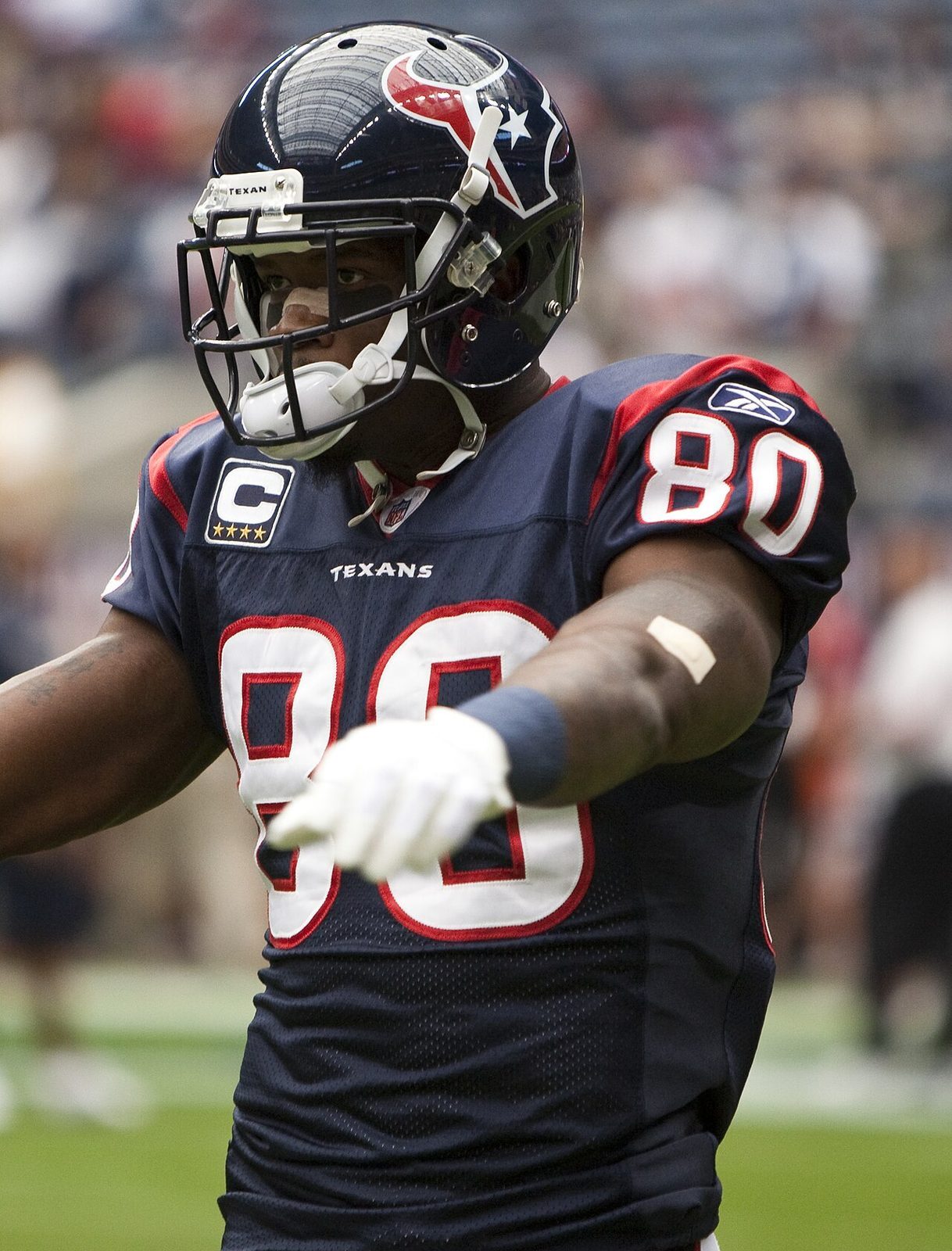

3. DeAndre Hopkins
Hopkins earns third through seven Houston seasons of receiving value, with 632 catches and 8,602 yards belonging to the Texans portion of his career. His later production for other franchises is excluded. Johnson wins their comparison on a longer Houston body of work, while Hopkins’s sustained ability to carry a major receiving role puts him ahead of Foster. This is a close choice between different offensive jobs. We favor the receiver’s longer run of production here, without pretending that receiving yards and rushing yards can be directly converted into one objective score.
4. Arian Foster
Foster places fourth because his rushing and receiving helped give Houston an offense capable of controlling games. His 1,616 rushing yards led the NFL in 2010, providing a clear peak marker, and four Pro Bowls support the sustained case. All seven Texans seasons count; his later Miami stop does not. Hopkins gets a narrow advantage for the length of his receiving contribution. Foster stays above Brown because his best years carried such a large share of the attack, while acknowledging that the running game depended on the line’s work too.
5. Duane Brown
Brown ranks fifth because the offense’s best stretches required high-quality tackle play as well as recognizable skill players. His first-team All-Pro selection for the 2012 season establishes a position-level peak, while a tenure beginning in 2008 supplies longevity. The Houston appearance before his 2017 trade counts; subsequent Seattle and Jets work does not. Foster receives the narrow advantage for concentrated offensive production, but Brown’s protection and run blocking have independent value. He stays above Joseph because his sustained work at left tackle earns a slight edge in this cross-position judgment.
6. Johnathan Joseph
Joseph is sixth for nine Houston seasons that gave the defense continuity at cornerback. The team recorded 17 interceptions and 118 passes defensed for his Texans career when he left in 2020; those are franchise-tenure totals, not his whole NFL record. His Bengals and later stops are excluded. Brown’s offensive-line peak breaks the adjacent comparison, but Joseph’s longer Houston contribution gives him an advantage over Williams. His case also prevents a defensive list from being reduced to pass rushers: covering receivers consistently is a distinct form of sustained value.
7. Mario Williams
Williams takes seventh because his six Texans seasons established a high standard of pass-rushing production before Watt’s arrival. His 53 Houston sacks and two Pro Bowls supply a concrete playing case beyond the attention attached to being a first overall draft pick. The later Buffalo and Miami years are excluded. Joseph receives the longevity advantage, while Williams edges Schaub for his stronger individual defensive peak relative to position. His final Houston season was shortened by injury, so the ranking does not assign him the full defense’s postseason work simply because he was on the roster.
8. Matt Schaub
Schaub ranks eighth for seven Houston seasons that helped move the franchise into a more productive offensive period. His 23,221 passing yards and 124 passing touchdowns are Texans totals, keeping the comparison separate from later NFL stops. Williams gets a slight advantage for individual excellence within his position, rather than automatic quarterback preference. Schaub’s difficult ending should not erase his earlier value, but the unevenness matters when comparing sustained performance. He remains above Ryans because Houston received a longer stretch of offensive responsibility at the sport’s most influential individual position.
9. DeMeco Ryans
Ryans earns ninth through his Houston playing career alone. The 2006 AP Defensive Rookie of the Year award established an immediate peak, and Pro Bowl selections for the 2007 and 2009 seasons showed that the first impression lasted. His later Philadelphia playing years and coaching achievements are excluded. Schaub gets the edge for longer offensive responsibility; Ryans stays above Daniels because his individual recognition gives him a stronger position-level case. The distinction matters for a familiar name whose present-day coaching role can otherwise obscure what this ranking is actually measuring.
10. Owen Daniels
Daniels completes the ten through eight Houston seasons of receiving work from tight end. His 385 catches and 4,617 yards with the Texans, alongside two Pro Bowls, establish a sustained contribution rather than a single memorable game. Later Baltimore and Denver seasons do not count, including achievements that belonged to those teams. Ryans wins the close comparison on individual peak recognition. Daniels earns the final place for reliable production across the franchise’s early development, with his role assessed against other tight ends before it is compared with the more visible wide receivers above him.
Defensive careers in context
Watt is the clear defensive leader here, followed in the overall order by Johnathan Joseph, Mario Williams and DeMeco Ryans. They performed different jobs: interior disruption and edge pressure, outside coverage, pass rushing, and linebacker organization. We do not combine tackles and sacks into an invented score. Ryans is assessed only as a player; his later coaching work cannot improve his position. The same restriction excludes later achievements elsewhere from Williams and Joseph, however important those seasons were to their overall NFL careers.
Wear their legacy
Johnson’s number 80 and Watt’s 99 connect a jersey choice to two different foundations of the franchise. Foster’s 23 points toward the running game that helped Houston become a contender. A present-day product can honor those careers without being an original game-used jersey, and a current player’s edition offers another way to wear team colors. The product description should make that distinction clear.
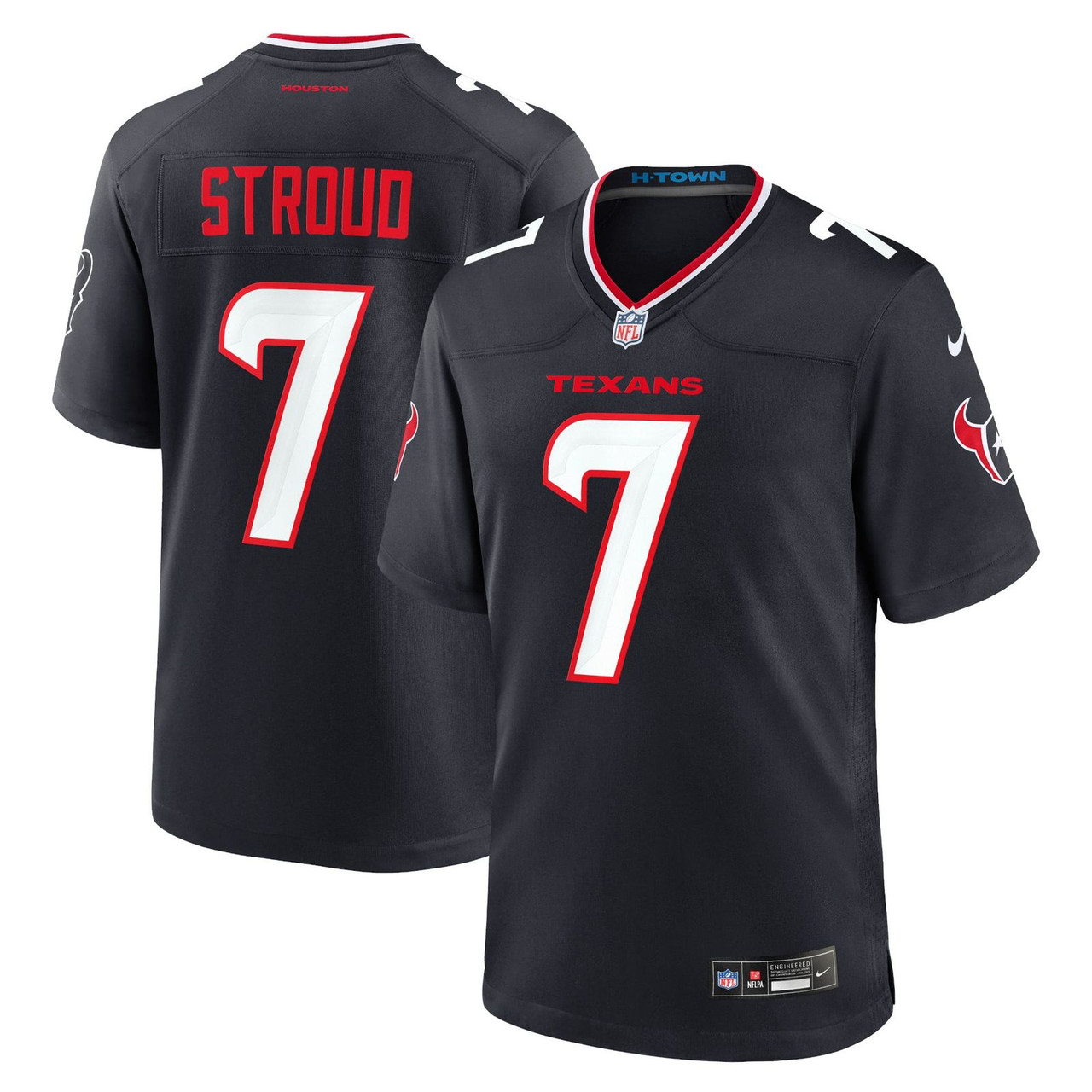
Compare the Texans throwback jersey collection with the legends jersey hub. Ranking position does not imply every player’s jersey is stocked; verify the individual listing.
The Houston Texans jersey numbers guide covers recognition and number policy. A modern Nike edition can honor a legacy without reproducing historical construction.
Frequently asked questions
Who is first among the best Houston Texans players of all time?
J.J. Watt ranks first because three Defensive Player of the Year awards establish a franchise peak unmatched in this comparison. Andre Johnson is second for twelve Houston seasons and exceptional receiving value. Johnson has the stronger longevity argument, making the first two a meaningful criteria choice.
Why are Houston Oilers stars excluded?
The Oilers and Texans are different franchises. The Texans began play in 2002; the Oilers’ records continue with the Tennessee Titans. Sharing a city does not transfer those players, AFL titles or statistical records into Texans history.
Does DeMeco Ryans receive credit for coaching?
No. The ranking uses his 2006–2011 Houston playing career, including the 2006 Defensive Rookie of the Year award. His later work as a coach is a separate career and does not count toward his playing placement.
Can active players join the Texans’ best players of all time?
Yes. Completed performance is eligible through 2025, with no requirement to retire or enter Canton. Our lower places favor longer Houston contributions. That judgment can change as careers develop, but unfinished 2026 statistics and predicted future accomplishments are excluded from this edition.
Sources
- Official career profile: J.J. Watt
- Official career profile: Andre Johnson
- Official career profile: DeAndre Hopkins
- Official career profile: Arian Foster
- Official career profile: Duane Brown
- Official career profile: Johnathan Joseph
- Official career profile: Mario Williams
- Official career profile: Matt Schaub
- Official career profile: DeMeco Ryans
- Official career profile: Owen Daniels
- Canton jersey-number index: representative numbers
- Texans numbered 2011 roster
- Texans numbered 2015 roster
- Andre Johnson: Houston tenure and number 80
- Duane Brown 2017 trade