

Best Detroit Lions Players of All Time: Our Top 10
Posted by JerseyZenith on Oct 27th 2026
- Ten players ranked for on-field contribution at this franchise.
- Performance cutoff: the completed 2025 season; unfinished 2026 results and projections are excluded.
- Honors reviewed separately through October 27, 2026.
- Team years describe franchise tenure; reserve years are labeled. Numbers are documented representative team numbers, not an exhaustive uniform index.
Detroit’s history reaches back through the Portsmouth Spartans and the pre-Super Bowl championship years. This top ten compares those careers with later offensive stars, giving defenders and blockers the same opportunity to lead a cross-era discussion.
Our top 10 at a glance
| Rank | Player | Position | Team years | Jersey number(s) | Franchise achievement |
|---|---|---|---|---|---|
| 1 | Barry Sanders | RB | 1989–1998 | 20 | 1997 NFL co-MVP; 2,053 rushing yards that season |
| 2 | Joe Schmidt | LB | 1953–1965 | 56 | Ten straight Pro Bowls; member of two NFL title teams |
| 3 | Calvin Johnson | WR | 2007–2015 | 81 | 1,964 receiving yards in 2012; three first-team All-Pro selections |
| 4 | Bobby Layne | QB | 1950–1958 | 22 | Quarterback of the 1952 and 1953 NFL championship victories |
| 5 | Jack Christiansen | S/PR | 1951–1958 | 24 | 46 interceptions and eight punt-return touchdowns |
| 6 | Lou Creekmur | G/T | 1950–1959 | 76 | Eight straight Pro Bowls; three NFL championship teams |
| 7 | Lem Barney | CB/Returner | 1967–1977 | 20 | 56 interceptions; seven Pro Bowls |
| 8 | Yale Lary | S/P | 1952–1953; 1956–1964 | 28 | 50 interceptions; three NFL punting titles |
| 9 | Dutch Clark | Tailback/QB/K | 1931–1932; 1934–1938 | 7 | Triple-threat leader of the 1935 NFL champions |
| 10 | Alex Karras | DT | 1958–1962; 1964–1970 | 71 | Four Pro Bowls; 1960s NFL All-Decade Team |
How we ranked these players
The ranking criteria balance peak, longevity, position, era, All-Pro recognition and postseason contribution. Team success is shared; no numerical scoring formula is claimed.
The franchise’s earlier Portsmouth seasons belong to this history, but a modern position label cannot fully describe a 1930s player’s job. Dutch Clark called plays, ran, passed and kicked; later specialists worked within a different game. We use contemporary recognition and demonstrated responsibility to bridge those eras. Similarly, the 1950s NFL championships are genuine titles, identified by their own names rather than relabeled as Super Bowl wins. A player’s coaching career does not add points to his playing record.
The 10 greatest Detroit Lions players
1. Barry Sanders
Sanders leads because all ten of his NFL seasons supplied Detroit with exceptional rushing value. The 2,053-yard season in 1997 and the MVP honor establish the peak, while a Pro Bowl selection in every season shows its durability. He did not need a championship to demonstrate superiority at his position. Schmidt offers the strongest alternative through defensive leadership and longevity, but Sanders’s sustained offensive impact wins our comparison. His entire NFL career belongs to the Lions, so the argument requires no production borrowed from another franchise.


2. Joe Schmidt
Schmidt ranks second because thirteen Detroit seasons combined elite linebacker play with responsibility for organizing a major championship defense. Ten consecutive Pro Bowls offer evidence beyond retrospective reputation. We count his playing work, not his later head-coaching service. His role in the 1953 and 1957 title teams matters without assigning him all the defense’s credit. Johnson has the more visible statistical peak, but Schmidt’s longer tenure and repeated excellence at a less easily measured position give him the advantage in accumulated Lions value across this comparison.
3. Calvin Johnson
Johnson places third for a receiving peak that remains extraordinary even after allowing for a more pass-friendly era. His 1,964 yards in 2012 show how much production Detroit could concentrate in one receiver, while three first-team All-Pro selections establish repeated excellence. All nine NFL seasons were with the Lions. Schmidt’s longer defensive record wins second; Johnson edges Layne because our ranking gives substantial weight to dominance relative to position. His individual case does not depend on inventing a playoff run or a team championship that his record does not show.

4. Bobby Layne
Layne earns fourth through quarterback play that helped define Detroit’s championship decade. His late winning drive in the 1953 title game supplies a specific postseason contribution rather than a vague appeal to leadership. He also belonged to the 1957 champions, but injury meant he did not start that title game. His work after the 1958 trade to Pittsburgh is excluded. Johnson gets a narrow peak advantage; Layne remains above the next group because his Detroit offense repeatedly converted high-level play into meaningful championship opportunities during his tenure.
5. Jack Christiansen
Christiansen is fifth because his Detroit value crossed defense and special teams. Forty-six interceptions and eight punt-return touchdowns capture two different ways he could change a game. His eight-season tenure also covered the three 1950s NFL championships. We place him ahead of Creekmur for the unusually broad impact of his best years, while Layne receives a narrow advantage for his sustained offensive command and direct championship-game work. Christiansen’s place does not rely on comparing an old return schedule with modern totals as though opportunities were identical across eras.
6. Lou Creekmur
Creekmur’s sixth place gives line play its own share of Detroit’s championship story. He earned recognition at guard and tackle, with eight straight Pro Bowls supporting a career that is harder to summarize through individual box scores. His blocking helped the offense through all three 1950s title seasons. Christiansen gets the advantage for broader game-changing peak value, but Creekmur’s longer service keeps that comparison close. Against skill-position candidates outside this ten, his sustained standing among contemporary linemen carries more weight than the lack of a familiar yardage total.
7. Lem Barney
Barney ranks seventh through eleven Detroit seasons of cornerback excellence and return value. His ten interceptions as a rookie introduced a career that finished with 56, but the seven Pro Bowl selections show that the argument is more than a spectacular first impression. Unlike several players above him, he did not need championship-team membership to belong. Creekmur’s repeated line excellence and title-era responsibility break the close comparison. Barney stays ahead of Lary because we favor his concentrated cornerback work, while recognizing that Lary’s punting adds a different kind of value.
8. Yale Lary
Lary earns eighth for exceptional work at safety combined with field-position value as a punter. Fifty interceptions and three punting titles describe separate contributions that a defense-only comparison would miss. His Detroit tenure has a military-service break in 1954 and 1955, which should not become two invented playing seasons. Barney gets a narrow advantage for his cornerback peak; Lary’s additional responsibilities make the gap small. He also supplies another reason to compare players within their actual roles before deciding where they belong in a franchise-wide order.
9. Dutch Clark
Clark is ninth because a franchise ranking should reach beyond the television era. His Portsmouth seasons belong to the same organization that became the Lions, and his Detroit work helped deliver the 1935 NFL championship. The quarterback label reflects play-calling responsibility within a very different offense; he also ran and kicked. We use number 7 as a documented representative number rather than a complete early uniform index. Lary’s longer service wins the comparison above him, while Clark’s breadth and championship contribution secure his place ahead of the final selection.
10. Alex Karras
Karras completes the ranking through sustained excellence inside Detroit’s defensive line, supported by four Pro Bowls and selection to the NFL’s 1960s All-Decade Team. His 1963 suspension is excluded from the playing years rather than hidden inside an uninterrupted range. Clark receives the edge for broader responsibility and championship contribution, but Karras has the longer modern defensive case. His place is based on work at tackle, not his later entertainment career. Official accounts differ on some All-Pro counts, so those disputed totals are not used to manufacture a tie-breaker.
The best Lions defensive players of all time
The best Lions defensive players of all time in this ranking begin with Joe Schmidt and Jack Christiansen, followed by Lem Barney, Yale Lary and Alex Karras. Schmidt receives the strongest blend of longevity and responsibility, while Christiansen adds substantial return value. Barney’s turnover production, Lary’s safety and punting work, and Karras’s interior play illustrate why no single statistic settles the order. Older defensive records also need care: a missing modern sack total is not evidence that an earlier tackle created no pressure.
Wear their legacy
Sanders and Barney share the familiar number 20, but they represent different positions and periods. A name, number and team color together identify the intended tribute more reliably than the number alone. Johnson’s 81 points toward a later receiving era, while the championship players provide a different historical starting point. Check the specific edition when comparing a modern garment with an older uniform.
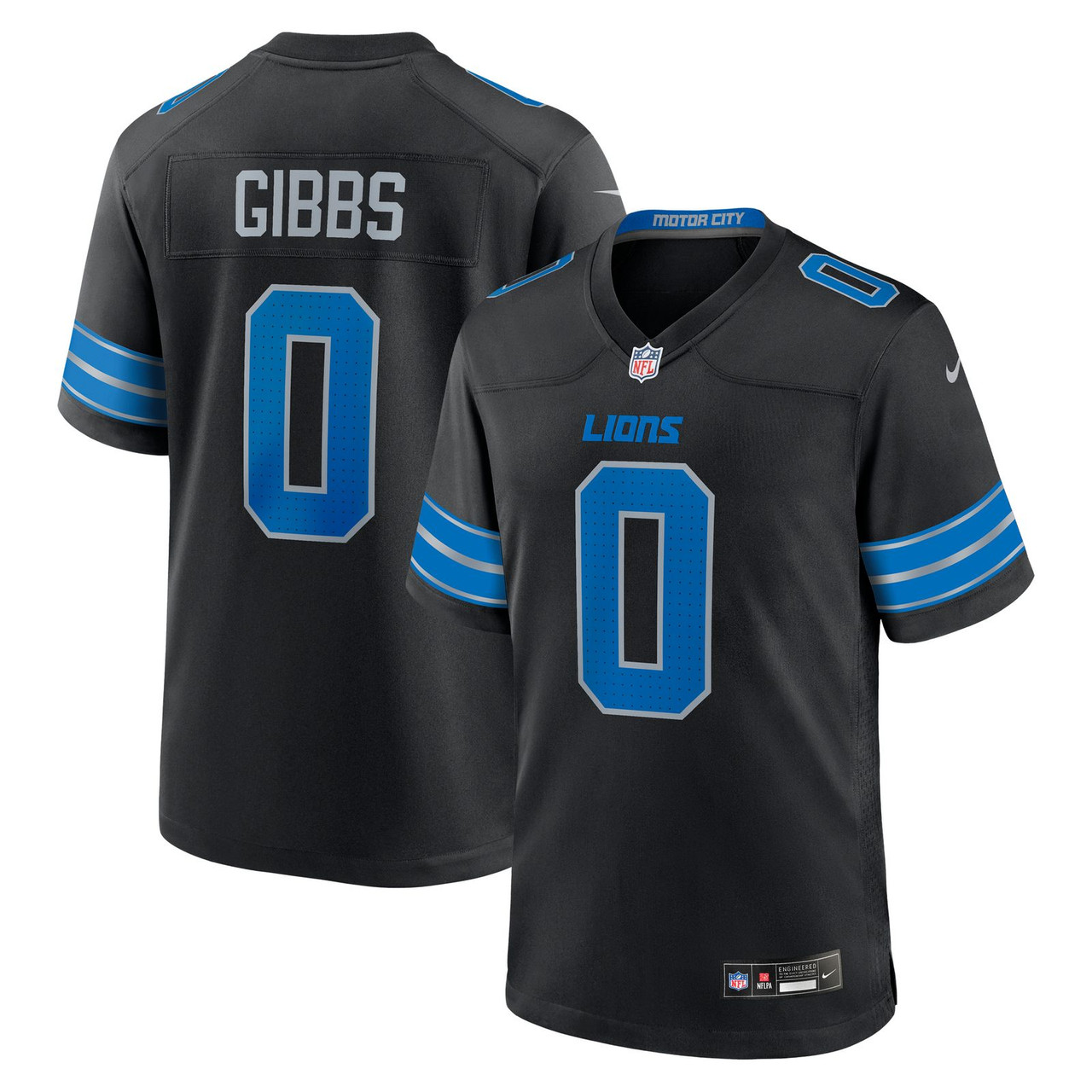
Compare the Lions away jersey collection with the legends jersey hub. Ranking position does not imply every player’s jersey is stocked; verify the individual listing.
The Detroit Lions jersey numbers guide covers recognition and number policy. A modern Nike edition can honor a legacy without reproducing historical construction.
Frequently asked questions
Who is first among the best Lions players of all time?
Barry Sanders is first here for ten Detroit seasons of sustained elite rushing, including his 2,053-yard 1997 MVP campaign. Joe Schmidt is second because his long defensive career combines contemporary recognition with major responsibility on championship teams.
Why does Calvin Johnson rank above Bobby Layne?
Johnson receives the narrow advantage for a dominant receiving peak, highlighted by 1,964 yards in 2012. Layne has the stronger championship argument. Our criteria treat titles as context and contribution rather than assigning all team success to the quarterback.
Do Portsmouth Spartans seasons count?
Yes. Portsmouth is the same franchise that moved to Detroit in 1934. Clark’s 1931–1932 seasons are included alongside his later Detroit service; his 1933 absence is preserved. This continuity does not make unrelated Detroit professional teams part of the record.
Are the Lions’ best players of all time chosen by Super Bowl wins?
No. The early titles discussed here are NFL championships from before the Super Bowl era. The article makes no unsourced claim about later team outcomes. Completed performance ends with 2025, while honors are reviewed separately through October 27, 2026.
Sources
- Official career profile: Barry Sanders
- Official career profile: Joe Schmidt
- Official career profile: Calvin Johnson
- Official career profile: Bobby Layne
- Official career profile: Jack Christiansen
- Official career profile: Lou Creekmur
- Official career profile: Lem Barney
- Official career profile: Yale Lary
- Official career profile: Dutch Clark
- Official career profile: Alex Karras
- Canton jersey-number index: representative numbers
- Lions official historical numbers review
- Lions historical Thanksgiving gallery: Creekmur 76
- Franchise origins and 1935 championship