
Best Bills Players Of All Time: Our Top 10
Posted by JerseyZenith on Oct 27th 2026
- Ten players, ranked by franchise-only performance across positions and eras.
- Performance cutoff: the completed 2025 season; no unfinished 2026 statistics or projected achievements.
- Canton and other honors reviewed separately through October 27, 2026.
- Jersey numbers identify documented use at this franchise; team years distinguish active and reserve status where relevant.
Buffalo’s story includes AFL titles, four consecutive AFC championships and a newer quarterback era. The same criteria apply to all three, without treating a Super Bowl win as a prerequisite for individual greatness.
Our top 10 at a glance: rank, position and franchise achievement
| Rank | Player | Position | Team years | Jersey number(s) | Franchise achievement |
|---|---|---|---|---|---|
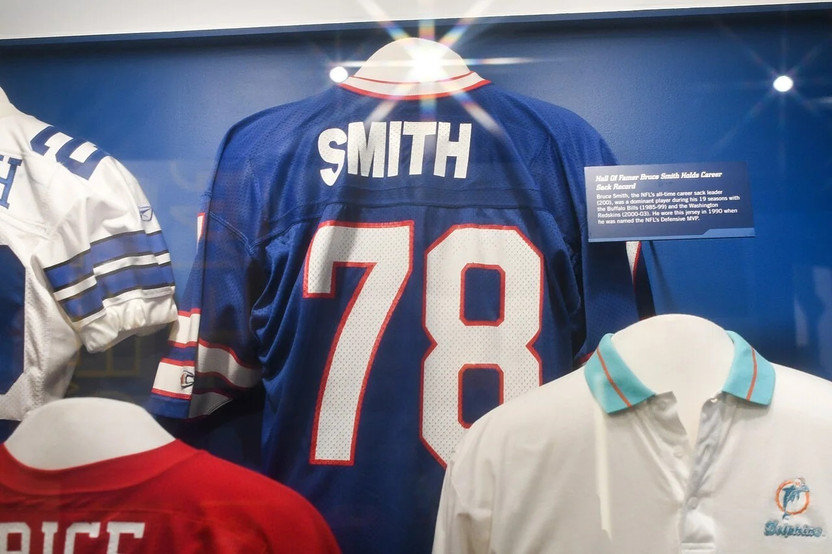
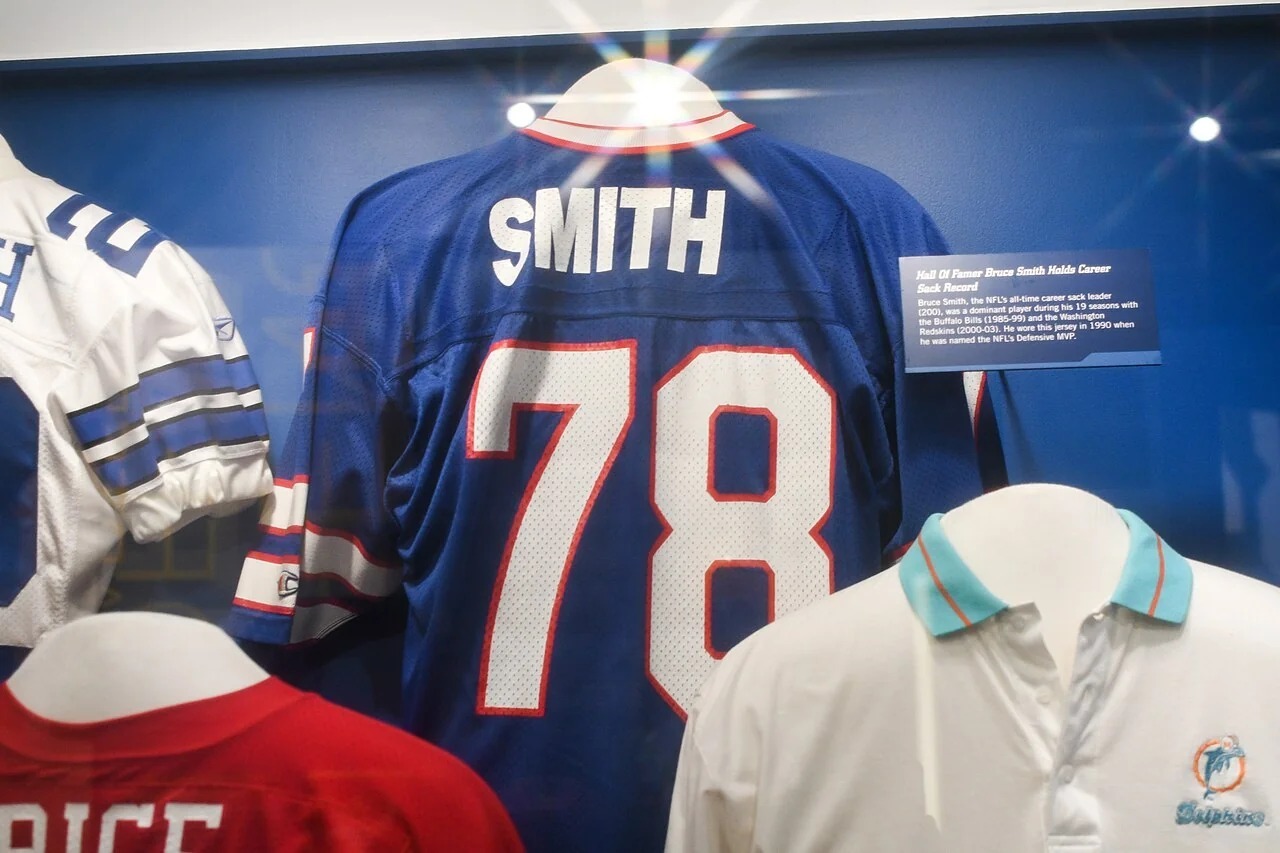
| 1 | Bruce Smith | DE | 1985–1999 | 78 | 171 sacks as a Bill; two AP Defensive Player of the Year awards |
| 2 | Thurman Thomas | RB | 1988–1999 | 34 | 1991 AP MVP; four straight AFC championship teams |
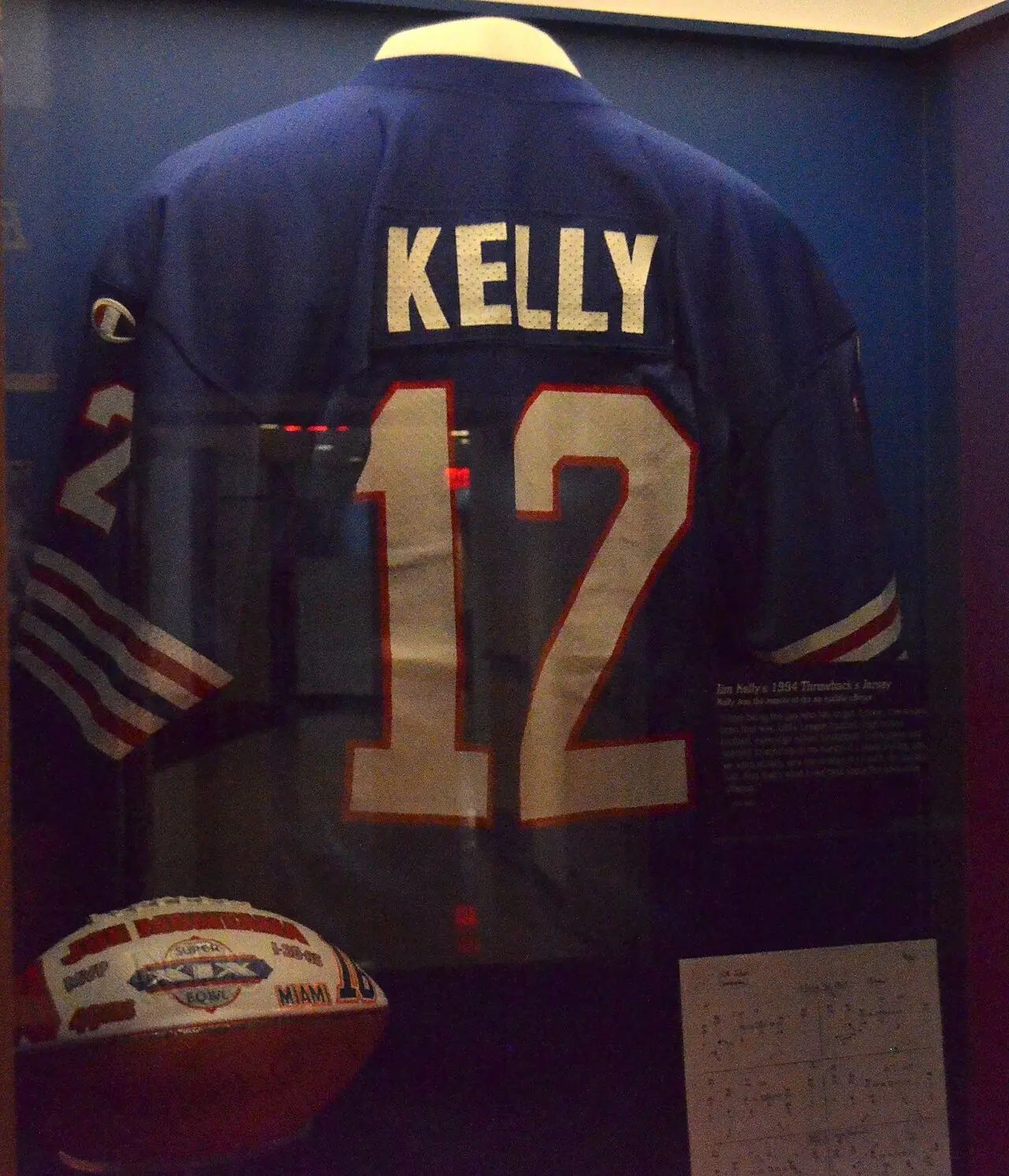
| 3 | Jim Kelly | QB | 1986–1996 | 12 | Four consecutive Super Bowl appearances with Buffalo |
| 4 | O.J. Simpson | RB | 1969–1977 | 32 | 2,003 rushing yards in the 14-game 1973 season; AP MVP |
| 5 | Andre Reed | WR | 1985–1999 | 83 | 941 receptions and 13,095 receiving yards as a Bill |
| 6 | Josh Allen | QB | 2018–2025 in this review | 17 | 2024 AP NFL MVP |
| 7 | Billy Shaw | G | 1961–1969 | 66 | Five consecutive first-team All-AFL selections; two AFL titles |
| 8 | Joe DeLamielleure | G | 1973–1979; 1985 | 68 | Key blocker for Buffalo’s 1973 record-setting rushing offense |
| 9 | Jack Kemp | QB | 1962–1969 | 15 | 1965 AFL MVP; quarterback of the 1964 and 1965 champions |
| 10 | Cornelius Bennett | LB | 1987–1995 | 97 | Five Pro Bowls as a Bill; four AFC championships |
How we ranked these players
We rank franchise-only contribution using peak against the same era and position, sustained value across Bills seasons, individual recognition and meaningful postseason work. The criteria reward more than raw volume. A guard’s contemporary honors and a defender’s influence matter alongside a quarterback’s production, with legacy explaining close calls rather than settling them automatically.
The official 2009 Bills All-Time Team was chosen by fan voting across positions. It is a historical candidate reference, not a current numbered ranking and not evidence about Allen’s later career. Our list makes its own comparisons and includes completed seasons through 2025. Smith’s Washington work, Thomas’s Miami season and other achievements outside Buffalo are excluded. Hall honors are checked through October 27, 2026. These judgments carry no official Bills designation, and we do not invent a numerical scoring model to conceal subjective tradeoffs.
The 10 greatest Buffalo Bills players
1. Bruce Smith
Smith leads because Buffalo received a rare combination of elite pass-rush peak and fifteen seasons of defensive production. His 171 Bills sacks are the relevant franchise total; the rest of his NFL-record career came elsewhere and is excluded. AP Defensive Player of the Year awards in 1990 and 1996 show that the dominance endured across different stages of his career. He also helped anchor four straight AFC champions. That mixture of longevity, individual superiority and repeated postseason value gives him the clearest overall advantage in this ranking.
2. Thurman Thomas
Thomas ranks second because his rushing and receiving were integrated into the offense rather than treated as separate specialties. The 1991 AP MVP award establishes his peak, while his central role on four consecutive AFC champions supplies a sustained postseason argument. His later Miami season contributes nothing here. Compared with Kelly, we give Thomas a narrow advantage for the way he dominated his own position at the height of Buffalo’s offense. Kelly’s longer command of the passing game makes the ordering close, especially for readers who place greater weight on quarterback value.
3. Jim Kelly
Kelly’s command of the no-huddle offense helped turn Buffalo into a repeat conference champion. Four consecutive Super Bowl appearances reflect sustained excellence in reaching the league’s biggest game, even though the Bills did not win it. We evaluate those seasons as valuable contributions rather than treating the final losses as an automatic disqualification. His entire NFL playing career belonged to Buffalo after the USFL period. He sits third because Smith and Thomas combined exceptional position-level peaks with the same deep postseason era, while Kelly’s leadership and offensive influence keep him comfortably near the top.
4. O.J. Simpson
Simpson’s football placement rests on his Buffalo performance, especially the 2,003-yard rushing season in 1973 and the AP MVP award that accompanied it. Achieving that total over fourteen games makes schedule context essential. He belongs high on a franchise playing list because his best seasons created an enormous share of the offense. Thomas receives the advantage here through receiving breadth, longevity within the winning core and repeated postseason contribution. This ranking evaluates on-field achievement; it does not treat football success as a judgment about a person’s wider life.
5. Andre Reed
Reed’s fifteen Buffalo seasons supply one of the most durable bodies of receiving work in franchise history. His 941 Bills receptions and 13,095 receiving yards belong to Buffalo, rather than a combined total that would include his final Washington season. He also delivered in the playoff environment that defined the early-1990s team. We place him fifth because that sustained contribution is stronger than a comparison based only on single-season honors. The top four had more commanding league-wide peaks at their positions, but Reed’s consistency makes the gap smaller than a simple award count suggests.
6. Josh Allen
Allen belongs in the top ten on completed work, with the 2024 AP NFL MVP award providing a clear peak marker. His passing and rushing have given Buffalo a different offensive shape from Kelly’s era, so a direct contest in raw totals would be unhelpful. This review includes his completed seasons through 2025 and makes no prediction about future championships or records. He remains sixth because the longer Buffalo careers above have more accumulated franchise value. The placement is deliberately revisable as additional seasons are completed, rather than based on projected greatness.
7. Billy Shaw
Shaw ensures the AFL championship era receives more than a ceremonial mention. His five straight first-team All-AFL selections and role on the 1964 and 1965 champions establish both individual and team excellence. Guard play has less visible statistical evidence, but contemporary recognition and repeated championship responsibility provide a strong comparison. He edges DeLamielleure because those Bills titles add value to a similarly distinguished position-level case. His entire professional playing career occurred before the AFL-NFL merger, which should change the comparison’s context rather than remove him from consideration.
8. Joe DeLamielleure
DeLamielleure receives eighth for the quality of his Buffalo line play across an initial seven-season run and a later return. His blocking helped the 1973 offense produce Simpson’s historic rushing season, giving an important team context to a lineman’s less visible work. We separate his Bills service from the substantial Cleveland portion of his career. Shaw’s championship contribution provides the tie-breaker above him. Against skill-position candidates outside the list, DeLamielleure wins on sustained excellence relative to his own position, rather than name recognition or a convenient box-score total.
9. Jack Kemp
Kemp’s AFL achievements deserve their own historical frame. He quarterbacked the 1964 and 1965 championship teams and earned the AFL MVP award in 1965, giving Buffalo an early standard of winning at the position. Those titles are not Super Bowl victories, but they remain franchise championships. We rank him below the longer or more dominant individual careers above because quarterback credit must be shared with a strong defense and running game. His place ahead of several later stars reflects meaningful postseason contribution, rather than nostalgia for the franchise’s first successful period.
10. Cornelius Bennett
Bennett completes the ranking through his combination of defensive versatility and sustained work in Buffalo’s championship-contending years. Five Pro Bowls as a Bill support the assessment independently of the four AFC titles. His range and pressure ability complemented Smith rather than duplicating the same role, which matters when judging the defense as a unit. The shorter Bills tenure keeps him below several players with comparable peaks. We also exclude his later Atlanta and Indianapolis seasons. His inclusion is a close editorial decision over other important defenders and offensive linemen, not a claim that tenth place is beyond dispute.
Wear their legacy
The early AFL champions and the four-Super-Bowl teams offer different entry points for a historical jersey choice. Browse the Bills away collection for a team-color look, then compare historical names in the legends jersey hub. Allen provides a more recent reference, but his presence in this ranking does not imply any particular edition or size is available.

A modern Nike design can honor an older player without reproducing every historical material or detail. Match the product description to the intended era and number. The Buffalo jersey numbers guide answers recognition and number-policy questions; this article keeps its focus on why each career earns a place in a cross-era football comparison.
Frequently asked questions
Why is Bruce Smith number one?
He combines fifteen Buffalo seasons, 171 Bills sacks, two AP Defensive Player of the Year awards and a central role on four AFC champions. The ranking uses the Buffalo total, not his entire NFL sack record.
Does Josh Allen already belong among the best Buffalo Bills players of all time?
Yes, on completed performance through 2025, including the 2024 AP MVP award. He is sixth here because the longer careers above supply more accumulated Bills value. Future results are not assumed.
Do AFL championships count?
Yes. Shaw and Kemp receive credit for the 1964 and 1965 AFL titles within their historical context. Those championships are identified accurately and are not described as Super Bowl victories.
Is this the same as the 2009 fan-voted All-Time Team?
No. That official selection filled positions from a dated pool. This article compares ten careers in an editorial order and evaluates later completed achievements separately.
Sources
- Bills 2009 fan-voted All-Time Team, historical context
- Josh Allen 2024 AP MVP announcement
- Josh Allen official Bills player profile
- Canton profile: Bruce Smith
- Canton profile: Thurman Thomas
- Canton profile: Jim Kelly
- Canton profile: Andre Reed
- Canton profile: Billy Shaw
- Canton profile: Joe DeLamielleure
- Official 2025 Buffalo Bills media guide: franchise careers, numbers and records
- O.J. Simpson national profile and Buffalo seasons
- Cornelius Bennett Bills tenure and five Pro Bowls
- Jack Kemp Bills championships and 1965 AFL MVP
Sources checked October 27, 2026. Performance comparisons stop at the completed 2025 season; Canton membership reflects completed induction classes through 2026.